


 Select Store
 US
US
 UK
UK
El Blog de Rooster
Rooster News

Rooster Van Shop Tour 2026
It’s a busy summer ahead here for the team at Rooster as we tour around the UK and European 2026 events. From the ILCA World Championship in Dun Laoghaire, Ireland, to HISC Youth Week on the South Coast of the UK, and everything in between, we’re excited to get back on the road with a van full of kit, catch up with the sailing community, and get hands-on once again.
The Rooster team will be on hand to help you find the right layers, whether it’s a rash vest and cap for the sunshine or, more appropriately for this week’s biblical weather, an Aquafleece and beanie, the team will make sure you’re ready to hit the water. At some events we'll also be armed with a selection of chandlery and performance gear to keep you sailing at your best. Expect a great selection of kit and accessories, a bean bag or two to relax on, expert technical advice, and plenty of fluttering feather flags to set the scene.
We’ve also bolstered our fleet with a shiny new van. It’s huge and proudly branded with our Rooster Riders, complete with the iconic Rooster logo across the bonnet. Give the team a toot if you spot them on the road!
Even with the new van, we can’t bring the entire warehouse with us, so if you’ve got your heart set on a particular piece of kit or you know you need a niche bit of chandlery, we recommend ordering online in advance.
Buckle up for the van shop tour, check out the events below;
ILCA Masters National Championship3 – 5 July 2026 | Parkstone Yacht Club
J Cup17 – 19 July 2026 | Royal Southern Yacht Club
IOCA Girls Weekend11 – 12 July 2026 | Weymouth & Portland National Sailing Academy
ILCA UK Nationals23 – 28 July 2026 | Weymouth & Portland National Sailing Academy
WASZP UK National Championship30 July – 2 August 2026 | Weymouth & Portland National Sailing Academy
IOCA UK Nationals2 – 7 August 2026 | Largs Sailing Club
HISC Youth Week29 July – 3 August 2026 | Hayling Island Sailing club
Parkstone Youth Week1 – 7 August 2026 | Parkstone Yacht Club
Topper National Championship9 – 14 August 2026 | Weymouth & Portland National Sailing Academy
ILCA Skills Week 15 – 19 August 2026 | Weymouth & Portland National Sailing Academy
ILCA 7 Men's World Championship23 – 30 August 2026 | Dun Laoghaire
RS Aero National Championship28 – 31 August 2026 | Eastbourne Sailing Club
ILCA 6 Women's World Championship5 - 12 September 2026 | Dun Laoghaire
WLYC 24 Hour Race12 – 13 September 2026 | West Lancashire Yacht Club
IOCA End of Seasons 3 – 4 October 2026 | Poole Yacht Club
RS Tera End of Season Championship24 – 25 October 2026 | Draycote Water Sailing Club
ILCA Autumn National Open24 – 25 October 2026 | Weymouth & Portland National Sailing Academy
Topper European Championship27 – 29 October 2026 | Weymouth & Portland National Sailing Academy

Sandy Point x Rooster: New bags added for the 2025 Gifting Season
Two years ago, we teamed up with Sandy Point — a small local business just down the road from Rooster HQ — to launch a limited-edition run of repurposed sailcloth bags for Christmas 2023. What started as a one-off festive collaboration quickly became something much bigger.
You loved the bags, you loved the story, and the idea of giving sails a second life.
So instead of ending with the holiday season, the Sandy Point Collection kept sailing on.
And now, for the 2025 gifting season, we’re excited to share that the range has grown again, with four brand-new bag styles and new colour options added to the original favourites.
Why repurposed sails?
Sails lead hard-working lives. They’re exposed to sun, salt, strain, and endless days on the water. Once they’ve reached the end of their performance life, they’re notoriously difficult to recycle and often end up with no real afterlife.
That’s where Sandy Point comes in.
Together, we’ve created a way to turn these materials into practical, long-lasting bags — each one with a story stitched into the fabric.
Every Sandy Point bag includes a small internal label telling you exactly which sail it was made from. It’s a nod to where the material came from and a reminder that nothing goes to waste.
Meet Rory from Sandy Point
Rory is the hands-on sailor and between him and his team at Sandy Point Chandlery, they are the makers behind every bag. He’s the guy who knows his way around knotted lines, splicing, and the finer details of ropework — and he’s as laid-back as they come.
Here’s what he had to say about the latest collection:
“Working with Rooster has been a really natural fit for us. These sails have already spent a lifetime doing what they were built for, so giving them a second purpose feels spot on. Every bag still carries a bit of that history in the cloth, and that’s something I love about the process — nothing goes to waste, and the story doesn’t stop. Seeing the collection grow just shows that people appreciate gear that’s made properly and built to last.”
What’s new this season?
We’ve added four new styles to the Sandy Point line-up — designed for everyday life, whether you’re heading to the boat park, commuting, travelling, or spending the day on the coast:
A5 Sailcloth Wallet – perfect for travel documents, small tech, and daily essentials.
A4 Sailcloth Wallet – ideal for notebooks, tablets, and keeping things organised on the go.
Sailcloth Coin Purse – small, tough, and sized for cards, cash, keys, or pocket items.
Premium Beach Bag – a roomy, hard-wearing beach companion with rope handles, stainless hardware, a water-resistant base, and a zipped internal pocket.
You’ll also find fresh colour variations across the original styles — inspired by Rooster’s coastal heritage.
The Sandy Point Collection has always been about more than bags. It’s about supporting local craft, reducing waste, and making better use of materials that still have plenty of life left in them.
By working with a local maker and giving retired sails a new purpose, it’s good to show how technical materials can become durable, everyday gear without compromising on practicality or design.
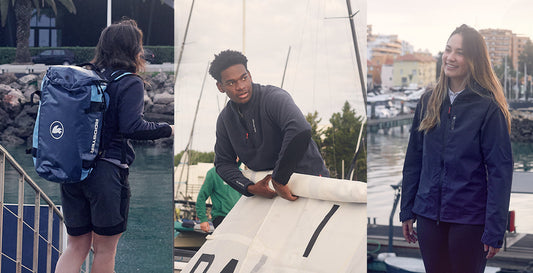
Rooster Autumn 2025 Collection | New Duffel Bag, Jackets, Fleece & Sunglasses
Autumn is a season of change — cooler mornings, shorter days, and crisp conditions on and off the water. It’s also the time when the right layers and reliable kit make all the difference. For the Autumn 2025, we’ve launched a brand-new line-up designed to keep you ready for whatever the season throws your way: the 50L Semi-Dry Duffel Bag, the Shoreline Jacket, the Polartec® Fleece, and Polarised Sunglasses.
Whether you’re heading to training, commuting, or escaping to the coast, these new arrivals are built to perform across every part of your lifestyle.
NEW IN:
When it comes to transporting kit, durability and reliability are key. The new 50L Semi-Dry Duffel Bag has been designed to handle the demands of everyday use and weekend adventures.
50-litre capacity: spacious enough for sailing kit, gym gear, or a weekend away.
Semi-dry construction: water-resistant materials keep contents protected from spray and showers.
Built to last: rugged fabrics and reinforced details ensure long-term reliability.
It’s the ideal bag for the sailor, coach, or anyone who wants one solution for their kit, wherever they’re headed.
👉 [Shop the Duffel]
The Shoreline Jacket brings together performance and versatility. Designed to bridge the gap between watersports protection and everyday practicality, it’s a lightweight, breathable jacket you can wear almost anywhere.
Water-resistant and breathable for comfort in unpredictable conditions.
Lightweight design makes it easy to wear on its own or over a fleece.
Everyday style that looks just as good on a coastal walk as it does on the daily commute.
It’s the kind of jacket you’ll keep by the door, ready for whatever the day brings.
👉 [Shop the Shoreline Jacket]
A dependable fleece is a year-round essential, but it really comes into its own in autumn. Our new Polartec® Fleece delivers premium warmth without bulk, making it perfect as a standalone piece or a layering option under waterproofs.
Made with Polartec® fabric for trusted quality and performance.
Warm yet lightweight, so you stay comfortable without overheating.
Versatile fit that works on the water, at the club, or in everyday use.
It’s practical, comfortable, and built to last — everything you need from a mid-layer.
👉 [Shop the Polartec Fleece]
Autumn brings low sun and dazzling glare, especially around the water. Our Polarised Sunglasses are designed to protect your eyes and improve visibility in these conditions.
Polarised lenses cut through glare and sharpen detail.
Lightweight and durable frames for all-day comfort.
Essential protection for training, coaching, or time outdoors.
They’re a small piece of kit that makes a big difference to comfort and performance.
👉 [Shop Sunglasses]
Ready for Autumn Adventures
From the tough new duffel bag to versatile layers and glare-cutting sunglasses, this 2025 collection has been designed with durability, comfort, and practicality at its core. Whether you’re preparing for time on the water, long coaching days, or simply making the most of crisp autumn weekends, this kit is built to move with you.
👉 [Explore all New 2025 Collection]
A New Chapter in Canada: Rooster x RNSYS
11th August 2025
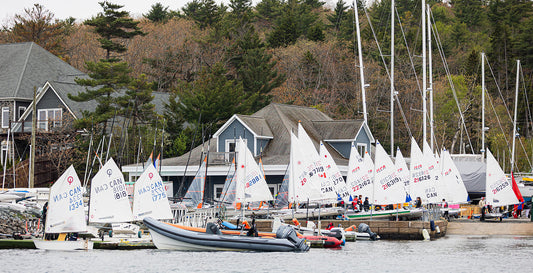
We’re proud to announce our new partnership with the Royal Nova Scotia Yacht Squadron (RNSYS)—the oldest yacht club in the Americas—marking the start of an exciting new chapter for Rooster in Canada. After beginning our support earlier this season, we’re now officially the Squadron’s technical clothing provider for 2025 and beyond, supplying high-performance apparel for sailors, staff, and major events both on and off the water.
Kicking Off with a Major Youth Sailing Event
Our first supported event under this partnership will be the Canadian Optimist Nationals, hosted at RNSYS from August 16–22, 2025. This premier youth sailing event will welcome some of the most promising young sailors from across Canada, and we’re looking forward to providing technical gear designed to keep them comfortable and performing at their best.
Looking Ahead – Foiling and High-Performance Sailing
Following the Opti Nationals, our partnership continues in October with the CANFOIL Cup—a key event on the Canadian foiling calendar. The regatta also incorporates the WASZP Nationals and Foiling Provincials, showcasing some of the most exciting and progressive aspects of modern sailing.
A Shared Vision for the Future
"We’re thrilled to be partnering with the Royal Nova Scotia Yacht Squadron—a club with deep heritage and a bold vision for the future of sailing in Canada," says Kate Morrison, Head of Marketing & Product at Rooster. "This is more than just a sponsorship; it’s a shared commitment to supporting all levels of sailing and foiling, from youth development to cutting-edge performance."
This partnership marks Rooster’s first major club collaboration in Canada, reinforcing our growing presence in North America and our dedication to supporting sailors at every level. Together with RNSYS, we look forward to building a strong future for the sport in 2025 and beyond.
Next up: Canadian Optimist Nationals – August 16–22, 2025Where: Royal Nova Scotia Yacht Squadron, Halifax, NS
Follow the action and event updates on our social @RoosterKit.
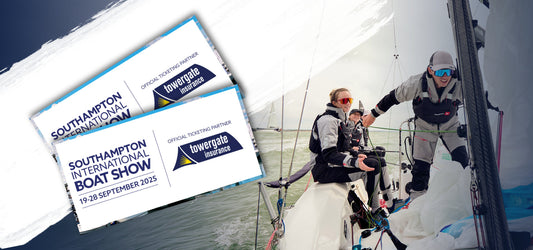
Rooster at Southampton International Boat Show – With a Fresh New Location!
This September, Rooster is returning to the Southampton International Boat Show – and we've moved! Our stand is now in a fresh new location with even more space to showcase the latest 2025 gear - including some of this years most exciting launches. You’ll find us right in the heart of the action – check out the map below to plan your visit.
What’s New?
We’ve been busy designing, testing, and launching innovative new gear for sailors and watersports lovers. Here's what's new at the stand:
Rooster Sunglasses – high-quality lenses, built for performance on and off the water.
SB1 Inshore Dry Smock – reliable and breathable outer layer, perfect for inshore conditions.
Coastal Hi-Fits – durable protection for coastal cruising without unnecessary bulk.
Waterproof Socks – because dry feet are happy feet.
SB2 Deck Trainers – designed for optimal performance in any environment, with unbeatable grip and comfort.
Microfibre Polartec Fleece – lightweight warmth, ideal for layering.
Upgraded Tech Shorts & New Women’s Tech Shorts – improved fit and function and now in a women's fit.
Swing by to try them on, check out the quality up close, and chat with our team – we’re always keen to talk all things kit.
Win Your Way In – 5 pairs of tickets up for grabs!
We’re giving 5 lucky Rooster fans a chances to win a pair of tickets to attend the show for free.
To enter, simply:
Follow us on social media
Like the competition post (check it out on Facebook and Instagram)
Share it on your story and tag @roosterkit
Tag the friend you’d bring along in the comments
Winners will be announced via DM from the Rooster official Instagram and Facebook pages – so make sure you’re following us on Instagram and Facebook to stay in the loop and enter your name in the draw.
Save £10 – Tell all your friends!
Want a discount on your ticket? Use code ROOSTERSAIL at checkout when booking your tickets to get £10 off via the Southampton International Boat Show Website. Share the code with your Yacht club, Sailing Club and all your friends to spread the word!
Rooster x Rockley Giveaway – Scan to Win
This year, we’ve teamed up with Rockley for an exclusive giveaway. Keep an eye out for Rooster x Rockley signs around the lake – Scan the QR code to sign up for your chance to win a £1000 bundle from Rockley and Rooster – the perfect way to stock up on essentials and book that sailing course or activity you’ve been dreaming of! (Terms and conditions apply).
We can’t wait to see you at the show. You'll find our exclusive show-only deals and our much-loved Outlet steals (get there early - they don't last long!)
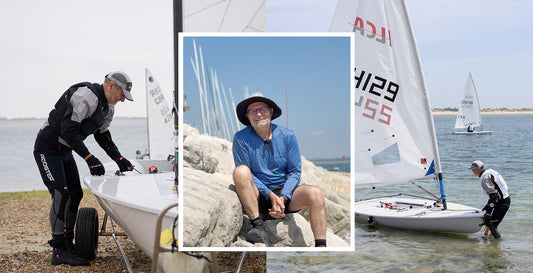
The Story of Rooster - Words from Founder Steve Cockerill
- Written by Steve Cockerill
When I started the brand, I was so keen to break down the divide between those who knew how to sail a boat and those who didn’t. I was passionate about sharing knowledge — giving people the confidence to enjoy the sport more.
It really all started with me being quietly determined to improve the mainsheet on a Laser (now the ILCA). That was my first goal. I’d tried working with some well-known rope manufacturers, but nothing was quite right. Then I had a brainwave and decided to try it myself. I bought a couple of miles of rope based on that idea… and it worked. People loved it. The breakthrough moment came when I shared it with Robert Scheidt — who was the No. 1 Laser sailor in the world at the time — and he faxed me back saying how much he liked it and asking for more. I’ve still got that fax to this day. That was the spark that made me think, maybe I really could do this.
It started in a room upstairs in my house… then a spare room and a shed in the garden… then a double garage and the lounge… then a small unit, then two units, and then a bigger unit. Now, we’ve got a warehouse and office in the UK and a distribution unit in the US — and we’re just about keeping up! I’m still amazed when I look outside and see how many cars are there… and how many great people are working at Rooster, helping it grow.
It’s taken a long time — and a lot of passion — to build the brand. Friends of mine used to say, “You’ll need at least a million pounds to turn a vision into a brand.” But I thought, no — you just need to make products people really need. Maybe I was a bit naïve. It’s definitely taken more than just money to get Rooster to where it is today. It’s always been a passion project — and it still is. We’re always checking ourselves, asking if we’re being fair to our customers. And it’s still great fun to represent the brand at events, chat to sailors, and see people enjoying the sport. That’s the best bit.
Every now and then people think I’ve retired — which is quite funny, because I haven’t! I’ve just changed my outlook. My wife finally retired from a high-pressure job in school senior leadership, and together we’ve managed to share the workload I used to carry — particularly on logistics and factory liaison. We even split my salary, which has given me a better balance… it’s less five or six days a week now and more like two or three.
Handing over the day-to-day running of Rooster to Luke Morrison wasn’t hard at all. Luke had grown up with Rooster — he first joined us as maternity cover, but quickly showed himself to be a real force. He’s brilliant at building relationships with our dealers… a total diplomat, to be honest. In fact, I think I was holding him back! Luke’s got so much drive, it made complete sense for him to take the lead. You might think that would be hard as the founder — but I know Luke’s as committed to Rooster and its ethos as I am.
So now, I’ve got plenty of time to keep working with our factories, stay close to the logistics, and enough “playtime” to keep me fired and excited for the years ahead.

Rooster Summer 2025 – Thoughtful Innovation, Made for the Water
What I love about Rooster is our team’s passion for technical development, a passion that consistently results in products that truly make sense for the sailing and watersports world. Steve has always been and continues to be a driving force in this process. Alongside Kate, our Head of Product and Marketing, and the wider team, we remain focused on creating products that are thoughtfully engineered, genuinely useful, and represent outstanding value for money.
This summer brings some exciting new additions to our range. So whether you're a dinghy sailor, keelboater, or simply someone who loves getting out on the water, there's something here for you.
Whatever you choose to invest in this season, we’re confident you won’t be disappointed. All we ask is that you share your thoughts, either by leaving a review or, if you’d prefer a more in-depth chat, feel free to email me directly at luke@roostersailing.com
This season, we’re proud to:
Launch the new SB1 Dry Smock, designed for sailors demanding reliable inshore protection
Evolve our much-loved Technical Shorts, now available in both men’s and women’s fits
Introduce our first-ever trainer with the SB2 Deck Trainer - a lightweight, flexible shoe with non-marking soles, designed for comfort and performance both on and off the boat.
And expand our technical casual range with the Shoreline Jacket and Polartec® Fleece, both now also available in women’s styles.
Here’s what’s launching:
SB1 Dry Smock
Designed to perform where it counts, this latest addition to our trusted SB1 Inshore Range combines advanced waterproofing, breathability, and freedom of movement in a lightweight, high-performance package. Ideal for both dinghy and keelboat sailors, the SB1 Dry Smock is engineered for comfort, durability, and serious use on the water.
Coastal Hi-Fits
Cost-effective without compromise – our new coastal hi-fits deliver great protection and performance at a sensible price. Tough, breathable and cut for comfort, they’re ideal for coastal cruising and general watersports. Now available in junior and adult sizing.
SB2 Deck Trainer
Our first footwear product – the SB2 Deck Trainer is lightweight, flexible and secure. With excellent grip and a non-marking sole, it’s designed for confidence on wet decks and all-day comfort ashore. A perfect blend of performance and versatility.
Changing Mat Bag
A practical essential – our upgraded changing mat doubles as a tie-up bag. Ideal for changing out of kit on rough or wet ground, then cinching everything neatly away. Simple, clean and effective.
Technical Shorts 2.0 – Reimagined
A fresh evolution of our much-loved technical shorts. Featuring tougher, more comfortable fabrics, improved cut, and smarter detailing. Designed to hold their shape and keep up with long summer sessions on or off the water – and now available in tailored fits for both men and women.
Shoreline Jacket
A lightweight, waterproof outer layer ideal for everyday use on and off the water. With taped seams, windproof fabric and a structured hood, it offers reliable protection when you need it. Smart enough to wear ashore, functional enough for rigging, RIB rides or coastal days – now also available in a women’s fit.
Polartec® Fleece
A warm and breathable fleece made from 100% recycled Polartec® fabric. Designed for layering or wearing alone, it combines technical performance with casual comfort. Durable, easy to wear and ideal for cooler summer mornings or breezy evenings – also now in a women's-specific cut.
What Our Customers Are Saying
"The SB1 Dry Smock is a game-changer! Keeps me completely dry and comfortable during races."— Verified Rooster customer
"Perfect for coastal cruising. Lightweight yet durable, and the fit is excellent."— On the Coastal Hi-Fits
"These trainers offer fantastic grip on wet decks and are super comfortable for all-day wear."— On the SB2 Deck Trainer
"A must-have for sailors. Makes changing out of wet gear easy and keeps everything tidy."— On the Changing Mat Bag
"The new design is spot on. Comfortable, durable, and the added pockets are very practical."— On the Technical Shorts
"Stylish and functional. Keeps me dry and looks great both on and off the boat."— On the Shoreline Jacket
"Warm without being bulky. Ideal for layering and very breathable."— On the Polartec® Fleece
We hope you enjoy discovering and using these new additions as much as we’ve enjoyed developing them. We’re proud of what this season brings – and we’re always listening, so your feedback is always welcome, it’s what helps us keep improving.
Wishing you a happy and fun-filled season on the water, hopefully with a Rooster product or two by your side.
EXPLORE THE FULL RANGE

Rooster Announces Exciting New Partnership with the Magenta Foiling Team for 2025
We’re thrilled to kick off the 2025 season with a bold new chapter in performance sailing by announcing our official partnership with the Magenta Foiling Team. As their exclusive clothing partner for the clinic team leaders and the participants who sign up to experience the thrill of the world of foiling, we'll be joining them on their mission to a sustainable female foiling talent pathway.
Being pioneers in both high-performance gear and supporting excellence in sailing, teaming up with the Magenta Foiling Team is a natural fit. Known for their fierce determination on the water, the Magenta Foiling Team embodies the very spirit of innovation and empowerment that Rooster stands for.
A Shared Vision for Performance and Progress
At Rooster, our mission has always been to support sailors at every level with gear that’s been tried, tested, and trusted in the toughest conditions. The Magenta Foiling Team, with their dynamic presence in the foiling circuit and commitment to pushing the boundaries of the sport, represents the future of sailing and matches Rooster's commitment to facilitating access to participation at all levels.
Empowering the Next Generation
The Magenta Foiling Team is known for their advocacy in growing diversity and inclusion in sailing. Rooster is honoured to support their broader mission of making the sport more accessible and inspiring the next generation of water sports enthusiasts.
As 2025 unfolds, we’ll be working closely with the team not only on ensuring they have the right gear to take them to their limits, but also on outreach initiatives that encourage more young women — especially in underrepresented groups — to get involved in foiling and competitive sailing.
What’s Next?
Collaboratively, we'll be bringing you behind-the-scenes content and exclusive team insights from around the world as the clinics unfold over the course of 2025. Follow the journey through social media as we enter an exciting season with our new teammates.

Announcing Our Class & Club Partnerships for 2025
We’re kicking off the 2025 season with some exciting news — Rooster is partnering with a fantastic line-up of classes, clubs, and teams across the globe to support the sailors and events that make our sport so special.
Some of these partnerships are long-standing collaborations we’re proud to continue. Others are brand new for 2025, marking fresh connections with organisations doing brilliant work in their communities. Whether it’s powering young Optimist sailors or backing world-class racing fleets, we’re here to support performance, progression, and fun on the water.
Here’s who we’ll be working with this season:
🌎 International Youth Teams
🇺🇸 USODA National & Development TeamsOur continued partnership with the United States Optimist Dinghy Association helps support junior sailors at every level of the Optimist pathway in the US.
🇺🇾 AUDO Uruguayan Optimist National TeamNew for 2025! We're thrilled to be backing Uruguay’s top young Optimist sailors as they take on regional and global competition.
EU EURILCA Solidarity ProgrammeInvolving every nation—igniting the next wave of young sailors.
🇬🇧 UK Class Partnerships
RS Tera UK ClassSupporting the next generation as they learn the ropes, build confidence, and discover the thrill of racing.
RS Feva UK ClassOne of the UK’s most vibrant youth fleets — we’re proud to keep supporting this fun, fast, and friendly class.
ITCA UK (Topper Class)A class close to Rooster’s roots, and still one of the best starting points for young racers.
ILCA UK ClassFrom youth to Masters, the ILCA fleet is one of the most competitive in the world — and we’re excited to continue our support.
RS Aero UK ClassLight, fast, and full of energy — the RS Aero class continues to grow, and we’re proud to be part of that momentum.
J-70 UK ClassNow in our third year of partnership, the J-70 fleet continues to deliver top-tier keelboat racing across the UK and Europe.
RS Class AssociationAn ongoing collaboration with the RS Class Association who support a wide range of RS fleets. Through initiatives like the RS National Tour and major class events, the association drives competitive yet friendly racing across the UK — and we’re proud to be along for the ride in 2025.
🌊 Expanding Across Watersports
GBSUPNew for 2025! We’re excited to partner with Great Britain Stand Up Paddleboarding as the sport continues to grow across the UK.
Magenta Foiling TeamAlso new this year, we’re proud to support this pioneering project empowering women in high-performance and foiling sailing.
⛵ Club Partnerships
Hayling Island Sailing Club (UK)A legendary venue on the UK circuit — we’re looking forward to a big year of racing and community at HISC.
Royal Nova Scotia Yacht Squadron (Canada)One of Canada’s most historic sailing clubs, now part of the Rooster family for 2025.
Why It Matters
Luke Morrison, CEO at Rooster explains:
"These class and club partnerships are the heartbeat of Rooster’s approach to supporting the watersports community. Whether we’re kitting out a national team or backing the growth of club racing, we’re proud to provide the gear that helps sailors push their limits and enjoy the sport to the fullest."
We’ll be sharing updates, behind-the-scenes content, and sailor stories from our partners throughout the season — so keep an eye on our socials and tag us when you’re out there racing in Rooster gear!
@Roosterkit
#RoosterKit #InYourElement

Full Sail into Spring: An Easter Update from the Rooster Team
As the breeze begins to warm and the days stretch a little longer, there's that unmistakable energy amongst the team - It’s the buzz of boats back on the water, spring sessions, and plans for the season ahead.
This Easter, we want to take a moment to wish all of our customers, community, and partners a very Happy Easter from everyone at Rooster.
Over the past few months, we’ve been hard at work behind the scenes, preparing for what’s shaping up to be an exciting and full-throttle season on the water. Here’s a quick look at what we’ve been up to:
🌊 New Kit, Built for AdventureWe’re gearing up to launch our new season collection, with a selection of styles already live in the Coming Soon section of our website. This expanded range has been carefully developed for coastal and inshore sailors, and also includes a few fun new essentials. Among the highlights: the SB1 Inshore Smock, Shoreline Jacket, Women’s Technical Shorts 2.0, SB2 Deck Trainers, and our all-new Coastal Hi-Fits.
The SB2 Deck Trainers, in particular, have already been turning heads - not just on deck, but also among the SUP community, thanks to their lightweight design and excellent grip on wet surfaces.
Whether you're coaching, racing, paddleboarding, or simply out exploring, this collection is built to handle real conditions - created for real sailors and watersports enthusiasts who love what they do.
⛵ Supporting the Future of SailingFrom junior regattas to international championships, we’re proud to support a wide range of events — not only at the grassroots level, but right up to the highest levels of performance. Our 2025 calendar includes sponsorship of top-tier sailing regattas, stand-up paddleboarding (SUP) events, and coastal rowing beach sprints, reflecting our commitment to the broader watersports community.
Whether it’s inspiring the next generation or backing athletes at the peak of their game, we’re invested in helping the sport grow — and we can’t wait to share more from the water as the season unfolds.
🤝 Growing the Rooster FamilyWe’ve welcomed a new wave of ambassadors, riders, coaches, and team members into the Rooster fold - all united by a shared passion for performance, adventure, and life on the water. This season, you can expect plenty of behind-the-scenes stories, product favourites, and expert insights from across the Rooster community.
🇺🇸 Looking Ahead: US Developments
As our international presence continues to grow, we're currently taking time to carefully review our operations in the United States in light of recent changes, including updated tariffs and other regulatory shifts. The US remains a key market for us, and we’re committed to making well-considered decisions that allow us to continue supporting American sailors with the same care, quality, and passion that define the Rooster brand.
We’ll keep you updated as our plans take shape - and in the meantime, thank you for your continued support, trust, and patience.
This time of year is all about fresh starts - so whether you're clearing out your kit bag, upgrading your sailing wardrobe, or just itching to get back on the water, we’re here to help make it a season to remember.
Thank you for being part of the Rooster journey — for choosing our kit, wearing it with pride, and sharing our love for life on the water.
Wishing you a Happy Easter, plenty of breeze, and maybe just a bit of chocolate too.
The Rooster Team🐥🧡

Rooster's 2025 Supported Event Line Up
At Rooster, we’re proud to support the sailing community by helping events not only take place but also thrive. As a clothing partner, we provide high-quality gear that ensures sailors feel comfortable, prepared, and part of a wider community. But our support goes beyond just apparel - we work to enhance the overall event experience, making sure participants can focus on what they love most: being on the water. From grassroots youth events to international regattas, we’re committed to helping sailors of all levels enjoy, compete, and make lasting memories.
We’ve put together a calendar of the events we’ve partnered up with this year, we hope to see you there!
CHECK OUT THE 2025 LINE UP BELOW:
Find out more or register your place here.
Find out more or register your place here.
Find out more or register your place here.
Find out more or register your place here.
Find out more or register your place here.
Find out more or register your place here.
Find out more or register your place here.
Find out more or register your place here.
Find out more or register your place here.
Find out more or register your place here.
Find out more or register your place here.
Find out more or register your place here.
Find out more or register your place here.
Find out more or register your place here.
Find out more or register your place here.
Find out more or register your place here.
Find out more or register your place here.
Find out more or register your place here.
Find out more or register your place here: Website tbc
Find out more or register your place here.
Find out more or register your place here.
Find out more or register your place here.
Find out more or register your place here.
Find out more or register your place here.
Find out more or register your place here.
At Rooster, supporting the sailing community isn’t just something we do - it’s who we are. Through our sponsorships, we’re proud to help grow the sport we love, giving sailors the support they need to chase their goals, whether they’re just starting out or competing at the highest level. We can’t wait to see what this season brings and to cheer on all the incredible sailors pushing their limits on the water!

Rooster Announces New Partnership with Performans Yelken as Official Distributor in Turkey
We are thrilled to announce a new partnership with Performans Yelken, now the official Rooster distributor in Turkey. This collaboration marks an exciting milestone as Rooster continues to expand its global presence and strengthen its commitment to sailors and watersports enthusiasts worldwide.
Based in Turkey, Performans Yelken brings a wealth of expertise and a shared passion for the sport. The partnership ensures that Turkish sailors and watersports enthusiasts will have better access to Rooster’s innovative and high-quality product range, renowned for combining functionality, comfort, and performance.
“We are very pleased and excited to welcome Performans Yelken to the Rooster family as our new main distributor in Turkey,” said Luke Morrison, CEO of Rooster. “This partnership is a key step in our mission to deliver exceptional service, representation, and accessibility to the Rooster brand across the globe. We are confident that Performans Yelken’s knowledge and dedication will represent Rooster in the best possible way.”
Barış and İsmail, co-founders of Performans Yelken, added: “We are establishing ourselves as a reliable provider of great watersports brands into the Turkish market, and Rooster is a natural fit for us. Their innovative products and passion for supporting sailors at all levels perfectly align with our mission. We are excited to bring the Rooster range to Turkey and help grow its presence within our vibrant sailing community.”
Performans Yelken will now offer a full range of Rooster products, from technical sailing apparel to performance equipment, supporting sailors of all levels in achieving their goals. Together, Rooster and Performans Yelken aim to empower the Turkish sailing community with cutting-edge gear that meets the demands of both recreational and competitive watersports.
Rooster looks forward to collaborating closely with Performans Yelken to grow the brand’s footprint in Turkey while continuing to support and inspire the next generation of watersports enthusiasts.
Performans Yelken can be contacted directly at: info@performansyelken.com
News From Ambassadors

Against All Odds: My GB Worlds Team Selection by Laszlo Drummond
Blog submitted by Laszlo Drummond, Rooster Rider
Going into the GB Team Selection Trials, I felt confident. The forecast looked good, with strong breeze conditions that I knew suited me well. Even so, sitting on the start line before the first race, I was nervous — but mostly excited. This was what I had worked for all year.
Day One — Strong Start
Race one started exactly how I’d hoped. I got a great start, managed to stay clear, and finished second. I backed that up with a 4th and then a win in the final race of the day, which meant I ended Day One leading the regatta in first position.
It felt amazing, but I also knew selection weeks are long and anything can happen.
Day Two — Things Started Falling Apart
The first race of Day Two was okay. I finished 10th after dealing with both a yellow flag, penalty turns and losing 6 places
Then came the second race.
I was over the line at the start and received a BFD (Black Flag Disqualification). That immediately took away my discard and completely changed the scoreboard for me.
In the final race that day, the wind died. I got trapped out to the right-hand side of the course and couldn’t recover, finishing 34th. That race was hard to handle. Carrying a 34 at a selection event is brutal, and suddenly I’d gone from leading the event to feeling like I had let myself down with unnecessary mistakes.
Day Three — Another Black Flag
Coming into Day Three, I knew I had to reset mentally and sail smart, most importantly not to push the line too hard. I tried to come in with an open mindset, knowing I needed strong races.
But I pushed the line too hard again and got another black flag. I dont mind admitting that this was extremely emotional for me, I had minutes to pull myself together for the 3rd race. I managed it, gave everything I had a came first, another bullet.
Still, at that point, most people probably thought my Worlds campaign was over.
Honestly, statistically, it almost was.
Carrying two black flags at a GB selection event and still making the Worlds Team was close to impossible. We worked out afterwards that my chances of recovering into the top five were tiny — almost non-existent. I was lying 12th overall and 56 points behind 5th place going into the final day.
But I also knew the forecast for the last day was my kind of conditions: strong wind, where strategy, and confidence mattered.
Final Day — Clawback
Going into the final day, I knew exactly what I had to do.
Top-five finishes weren’t enough anymore. I basically needed to win everything.
The first race of the day went perfectly. I got off the line cleanly, sailed fast, and won the race. That gave me confidence immediately but I still had a mountain to climb.
In the second race, I had another good start and led the race from the beginning all the way to the finish — another win.
Suddenly the impossible started feeling possible.
By the final race, the maths were simple: I needed to beat the sailor ahead of me by enough points to guarantee my Worlds Team spot.
I went all in.
I won the final race too.
Four straight race wins under pressure to secure my place on the British Team heading to the World Championships.
Lessons From the Week
What I’ll probably remember most from this event isn’t actually the result — it’s the mindset.
It’s easy to feel confident when things are going well. It’s much harder when everything starts going wrong.
Carrying two black flags could have ended my week mentally. But instead, I tried to stay calm, reset each day, and trust my speed and training.
One thing I’m proud of is that the comeback was significantly done by gathering my spirits and focus, not letting my emotions after the second black flag get the better of me, continuing to race as hard as I could, but without unnecessary risks, I That felt pretty special.
The Team Around Me
This result also definitely didn’t happen alone.
I’m hugely grateful to everyone supporting me — my coach David, my family, my sponsor Rooster, and everyone who’s backed me through the hard years as well as the good ones.
So to now be representing Great Britain at World Championship level for a second year means everything, it's my last year in the Optimist Class.
Massive thanks to Rooster for supporting me throughout the journey. I’m incredibly proud to wear the kit and represent a brand that genuinely understands sailors and performance.
Now… bring on Morocco.

Breaking Barriers, Building Confidence: A Sailing Journey
Blog submitted by Logan Bell, Rooster Rider
I describe my younger self as someone who really struggled with new environments, meeting new people, and changes in routine.
When I first started sailing, it took me time to build trust and relationships with others in the sport.
But one small step led to another, and within my first season I had already achieved far more than anyone expected of me.
I found a sense of freedom, and something that no other sport or hobby had been able to give me.
Sailing didn’t just give me a hobby. It gave me focus, helped me build friendships and relationships, allowed me to develop new skills, and most importantly, it became a real passion for me.
Sailability gave me a sense of belonging, within a community that now stretches globally. I have just completed my 10th year of sailing, and my goals and hopes for future achievements continue to grow.
What Sailability offers – a sport for everyone
For me, the Sailability community has been transformative.
It is a space where people meet without judgement, where tough days are understood, and where everyone is free to be themselves – mentally, physically, and emotionally. Whatever the need, it can be met, allowing freedom from life’s challenges.
That sense of acceptance has become a foundation for me over the years. I have built confidence, passion, and drive not only to develop my own skills, but also to support others to achieve their goals and reach their potential.
Through Sailability, I have had opportunities I could never have imagined. I have raced internationally across the globe, representing my country, growing, and developing both skills and qualifications along the way. I have naturally become a role model to other sailors, especially younger sailors who are facing similar challenges to those I have faced or am still working through.
My message is simple: sailing is, and can be, for everyone. It is an inclusive sport. Sailing isn’t defined by background, ability, or circumstance. It is a sport that allows you to be yourself and take from it what you need. It gives you the opportunity to grow, explore, discover what you are capable of, and achieve things you may not have thought possible.
For me, it has become both a lifeline and a passion. I have gained many qualifications, and I have been recognised for my achievements and for the difference I make to other people’s sailing journeys. I have received several awards and have been named a “Rising Star”.
For someone else, sailing might be the beginning of an entirely new chapter.
Giving back through sailing
One of the most meaningful things to me now is watching newcomers take their first steps into the sport.
I recognise the anxiety, uncertainty, and challenges that come with that moment, but I can also see the potential in what they could gain.
Helping others find their own confidence and build their own journey is something I find humbling, and deeply rewarding to be part of.

Making the Move: Transitioning Boat Class with Amelie Ballantyne
Blog submitted by Amelie Ballantyne, Rooster Rider
Being a kid can be tough sometimes. There’s school, homework, friendships, and rules to follow. But when you’re a sailing kid, there’s another challenge: transitioning boat classes. At some point, the time will come to move on due to age, size, weight and this change can be tough too. For some people it’s exciting, but for others it can feel daunting. I want to share my experience of transitioning boat class and how it worked for me.
I decided to make the move at the end of the summer, after the Topper Nationals. I had been sailing in the Topper class for a few years and chose to transition into the ILCA class due to my age. Looking back, I think the timing was right for me because it has given me the whole winter to train before the sailing season starts. Even so, I was still nervous. I worried about what the class would feel like, what the training would be like, would it be a massive step up, who I’d be sailing with, and knowing I would probably be nearer the back of the fleet at first. I had so many thoughts going through my head.
I also spent a lot of time thinking about which class I should move into. I’m quite small and light, which would suit a double-handed boat best, but that also means dealing with a crew and I wanted to sail a single-handed boat so I could be my own boss. Naturally, as there are a lot around, I headed in the ILCA direction.
I applied for the RYA ILCA 4 Transition Talent Academy and, after the selection process, I was on the program for the year alongside other sailors who were also transitioning to the class. I was happy to find out that two of my Topper friends, George and Charlie, were doing the same thing. That made the whole experience feel a lot less daunting. The RYA Talent Academy has been a great option for me, and the coaches have been fantastic. From the very first day however, training DID step up a level!
One of the biggest differences I noticed straight away was the level of expectation on us. We were treated like youth sailors and expected to be much more independent, especially with our boat preparation and learning. Not long after starting the Talent Academy, our coach suggested that we sign up for the ILCA National Opens at WPNSA. Most of us decided to go for it, even though secretly none of us really felt ready for it.
On the first day, I was extremely nervous. Looking around the dinghy park, I saw adults, Olympians, and sailors I’d always looked up to. The atmosphere felt very different from junior sailing; less chaotic, more chilled out and people just get on with their own thing. There was no pushing at the tally board queue and far less parents and siblings present. I definitely felt a bit of imposter syndrome creeping in and assumed I’d struggle.
Sailing with around 70 boats on my rig on the start line, heading out past the harbour wall for the first time ever, was a huge step up. The waves, the pace, and the competition were intense. But when I came off the water, I felt absolutely buzzing. It was challenging for sure, but it was so amazing…..and I didn’t come last! The ILCA class has been very welcoming and helpful to new bees like me. Since then I have done several national events, including the RYA Youth Nationals on the ILCA 6 rig, which was awesome.
My advice to anyone thinking about transitioning classes is to choose your timing carefully and not rush into it. It’s a big step up from junior sailing, but if you feel ready, it can be incredibly rewarding. For me, looking back, I feel that you naturally head in a certain direction, but don’t forget you can try out other classes if you are not sure, such as the WASZP and NACRA15 classes for example. They often run taster/demo days which are great fun. Think about what class would suit you carefully, and don’t be afraid to feel nervous because that’s completely normal. It’s all about enjoying yourself, so sail something you like with the people you want to hang out with.

Hansa World Championships: The Importance of UV Protection on the Race Course
Blog written by Kirsten Pollock, SKUD18 Sailor
Hansa are the largest manufacturer in the world of sail boats used by people with disabilities. The boats are designed to a Universal principle, with weighted keels, that allows anyone, whether young, old, able or with a disability to sail easily and safely, making sailing a very equal and inclusive sport.
Every two years the five Hansa Classes come together for an International and World Championships. The boats are named by metric size, the smallest is the 2.3, then 303 divided into one and two-person fleets, the larger Liberty and finally the fast and powerful Paralympic SKUD18.
The 2025 Hansa Worlds took place at Pittwater, near Sydney, Australia. Sixteen nations, with competitors from Australia, Chile, France, Germany, Great Britain, Hong Kong, Italy, Japan, Netherlands, New Zealand, Poland, Portugal, Singapore, South Korea, Spain and USA took part and, representing Great Britain in the SKUD Class, was me, crewed with top local sailor Brett Pearce who was Australian Reserve Crew for the 2016 Paralympics in Rio. Other illustrious names in the fleet were Dan Fitzgibbon, three times Paralympic Medallist, plus Asia Pacific SKUD Champion Neil Rowsthorne.
The Rooster clothing was brilliant, especially the long sleeved UV top, UV neck sleeve and cap helped protect me and my crew from the sun. I have fair skin and burn very easily so having the right clothing especially in strong UV conditions makes all the difference. I could focus on sailing rather than having to contend with sunburn etc.
After the regatta I went travelling and Rooster were with me every step or wheel of the way. I spent a few days in central Sydney. I then went to Uluru, from there I went to Port Douglas and went to the Barrier Reef, I wore Rooster kit in the water to protect me from the UV rays. I then went to Melbourne.
My Rooster kit proved to be the ultimate travel companion — keeping me protected, comfortable, and ready for whatever came next. Whether I was sailing in high-performance conditions or exploring some of Australia’s most iconic landscapes, having reliable gear made all the difference. I genuinely wouldn’t travel — or sail — without it.

Big Dreams, Small Island: My Sailing Journey to the 2023 PanAm Games
Blog submitted by Rooster Rider Scarlett Hadley from St. Vincent and the Grenadines.
Competing in the 2023 Pan American Games in Chile was something I never imagined would be possible so early in my sailing career. Here I was at 16 years old, representing St. Vincent and the Grenadines on one of the biggest stages in the sport. It was also my very first international competition which is crazy to look back on.
Coming from a small Caribbean Island where sailing is not as competitive or recognized, stepping into the competitive sailing world was surreal and inspirational. I was racing against Olympians that I had previously only seen online and looked up to. Suddenly, I was no longer watching them, I was racing against them.
It meant the world to be able to represent my country. To have our flag on my sail and to know I was opening doors for other young sailors at home was what really made every challenge worth it. It pushed me far out of my comfort zone but also showed me how far passion, hard work, and belief can take you.
This experience would've been impossible without the support of Rooster, whose gear made it possible for me to compete at the top level, where before our sailors had little knowledge about the gear needed to perform at the best, especially in the cold conditions in Chile. The support has kept me prepared, whether racing in tropical heat or chilly winds and I’m incredibly grateful. As I anticipate the Junior Pan American Games in August and the Youth World Championships in Portugal this coming December, I'm hoping to be ready with the right equipment, especially a jacket to help with those freezing temperatures between races!
The PanAm Games, which would usually be a later goal for most, was just the beginning for me. I’m excited to keep learning, growing, and hopefully inspiring the next generation of sailors in St. Vincent and the Grenadines.

Reflexiones sobre la vela en 2024: Sam Mabey, Liam Willis y Nigel Rolfe
Get an inside look at our keelboat & sports boat teams thrilling 2024 season - packed with intense racing, unforgettable moment, some import lessons and rigorous testing of our new gear.
Sam Mabey
The 2024 sailing season has been busy, full of learning, challenges, and plenty of fun. My two main focuses were the Cape 31 circuit and getting back into dinghy sailing with the Aero 6 after almost six years away from a boat! Alongside those, I took a trip to the south of France for some classic racing with Varuna, started match racing with the Cowes Match Racing Academy and headed to Greece/Valencia to deliver FINN an N53 trimaran.
In the Cape 31 fleet, I raced as bowman with Jiraffe. We had a solid season, achieving consistent results and finishing 4th in the standings, despite an eventful final race where a kite trawl at the last leeward mark dropped us from first to 15th sending the season out with a bang! My Aero journey was more of a learning curve. I began training in March and quickly realised it would be tougher than expected. I dedicated as much time as I could ahead of my first event in June, the RS 30th regatta, where I performed well in light conditions. However, I struggled at the European Championships in heavier winds, yet still finished with a result I felt good about and headed into the worlds more confident. Although the first few days were challenging with a few capsizes and some amateur hour moments, I found my rhythm later in the week, leaving with valuable experience and a smile, despite the result.
This season, I also had the opportunity to test Rooster’s upcoming yachting gear, including the inshore smock, SB1 gear, and new deck trainers. I typically prefer running shoes or gym trainers over sailing brand trainers for their grip, so I was pleasantly surprised by the Rooster trainers—they kept their grip throughout the season and endured the demands of bow. Testing the SB1 smock in wet and windy conditions on the Cape was a highlight and can't wait to get my hands on the final version. Having a hand in the development of these products was rewarding, especially as I've been hoping for a Rooster dry smock, a key item in my inshore sailing kit.
It’s been a busy but fulfilling season, with the Cape Europeans and more match racing still ahead. I’m looking forward to building on all I’ve learned next season.
Liam Willis - RS21 Team Dark & Stormy
As the 2024 season comes to a close I thought I would reflect on a fantastic season of sailing, flying the flag at the events and helping with product development, in particular the SB1 range. I have had a set of SB1 Inshore kit for a year or so and have been putting it through its paces and it has performed brilliant in every application.
We started the season with a photoshoot with the Rooster team, sailing RS21s from Hamble, despite the lack of wind it was a fun day out and great to get some nice photos of us all in our kit.
My racing season kick off in big style with my first regatta of the year being Antigua Classics week on board a Spirit 65 as tactician, we had a fantastic week of sailing in the warm weather and came away with a good result.
Back in the UK with the RS21, the first event for us was Round 2 of the RS21 UK and Ireland Cup which was also the RS Sailing 30th Anniversary regatta held at Hayling Island. It was amazing to see so many boats out and such a large RS21 fleet, we were excited to crack out our new team kit for the year at this event. It was a tricky weekend with the light winds, but we were delighted to come away with the win. Next up was RS21 Cup Round 4 in our home town of Lymington, fantastic conditions all event with sunshine and big winds so was a lot of fun blasting around the Solent. Hard fort racing but bagged ourselves the win.
I then hopped out to Guernsey for another regatta on the spirit were the SB1s were the perfect items of clothing for the week with it being chillier than it maybe should have been in June but warm enough that heavy weather waterproofs were too much. Another fun week of racing and socialising with the team.
With the RS21 we then teamed up with fellow Rooster riders Team Rolfe to head to Ireland for the iconic Cork Week regatta. The event lived up to its reputation and put on an epic event both on and off the water. Despite the full range of conditions over the week, the team were on form and we managed to take 11 race wins out of the 12 races to win the class.
The event we were leading up to all year was the RS21 Nationals which were held in Dartmouth, having had a great start to the year we were determined to continue. Despite the lower turnout for the event than hoped the racing so still incredibly close and we had to work very hard. We were very pleased to pull it of with a race to spare and become the national champions.
The following week we began our European tour, again joining forces with Team Rolfe we packed up and made the drive south to Lake Garda for the RS21 Italian nationals. With a larger fleet of 40 boats and far higher standard of full professional sailors, we were unsure how we would fair. The fleet was very tight and mistakes were punished but Garda delivered and we had amazing conditions to enjoy. Not to mention the lovely scenary, food and drink off the water too. With some good results and some not so good, we took 10th place. Next up was the world championships in Spain, in L’Escala, with a similar high quality fleet from all around the world we knew we had a tough time to be near the front of the fleet, however day 1 couldn’t have been better as we took the race win in race 2, our first international race win in the RS21. A couple of not so good races over the next couple of days in harsh big winds and big waves drops a few places to finish 13th overall.
It has for sure been a busy year of sailing, with some downs but that just makes the ups feel even better. Looking forward to the next one!
Nigel Rolfe - RS21 Team 5'o Clock Somewhere
2024 has been a standout year, with our focus on the UK series laying a strong foundation for future success. We saw new sailors join the ranks and seasoned veterans return, making for competitive and exhilarating races.
We kicked off with midweek training in Hamble to shake off the winter rust. The first event was a breezy, cool regatta in Hamble, requiring full Rooster gear to keep warm. Lymington followed with intense competition, though we were reminded of the importance of tides a bit too late, costing us some results. We tested our new, lighter SB1 kit here—it was perfect for the warmer, wet conditions.
Next up was Cork, where the opening day brought heavy winds and waves, even challenging the local mark layers! Racing was tight, especially among the top five boats, with rain gracing us only while sailing. Cork also topped the social calendar with lively club activities and reunions with old friends.
All this was great preparation for our big challenges—the Italian Nationals and the 2024 Worlds in Spain. Italy’s Lake Garda proved hot, teaching us not to skimp on accommodation without air conditioning. Doh! With early morning starts in breezy conditions, we debuted the new Vakaros compass, which added a strategic edge to our race starts with precise distance-to-line readings.
The grand finale was the World Championships in L'Escala, Spain. With high winds and waves, it was a true test for both our gear and our teamwork. The conditions exposed the narrow margins for error, making it a humbling experience despite a year of progress together.
Reflecting on an unforgettable season, we’re ready for a winter break to reset and return even stronger next year. We’ll be back!

The Pinnacle of Sailing
As one of the biggest sporting events of the year is right around the corner, we're excited to introduce to you our athletes heading to the Games, who have worked so hard to get there. Please join us in wishing our athletes all the best over the next few weeks!
Monika Mikkola
ILCA 6 (Women's Dinghy)
Finland
We have been working with Monika for the last six years and have been proud to watch her grow and support her on her journey to the Games. It's been amazing to see her establish herself at the pointy end of the ILCA 6 fleet.
Hernán Umpierre & Fernando Diz
49er (Men's Skiff)
Uruguay
New to the Rooster Team this year, with some very impressive results in the lead up to the games, we can't wait to cheer these guys on!
Elena Vorobeva
ILCA 6 (Women's Dinghy)
Croatia
A long time Team Member of Rooster and heading for her third Games this year. She'll be one of the most experienced sailors on the start line - wishing her all the best for the competition.
Ebru Bolat
ILCA 6 (Women's Dinghy)
Romania
Another new Team Member and friend of Rooster heading to the Games, qualifying in style by taking the top spot at the Last Chance Regatta in April.

My sailing journey
I started my sailing journey at the age of 8, where I joined my local club, Felpham sailing club, after trying sailing on an open day. Over the next two years, I got involved in many training sessions in order to learn how to helm a boat, and sail with others who were a similar age to me. I joined in on Friday night youth sessions to build my skills and confidence more, quickly progressing on to taking other new sailors out and helming for them.
In 2018, during our youth week, I raced for the first time and haven’t looked back since. I started off racing my pico, however quickly realised that I loved racing and to continue this, I needed to leave my pico behind. With some help and advice, I moved into the RS Tera and completed my first event – the Regionals at Queen Mary sailing club.
In 2020, as I continued to learn about the Tera and progress with my racing knowledge, I joined the Rooster team and one of their ambassadors. Through this, I was supported with many opportunities to do new things, and was encouraged to sail at my best and enjoy the sport, wherever that may take me. I have continued to be part of the Rooster team as both an ambassador and a Rider since 2020, and I am proud to say that I am still part of the team now.
Over the pandemic, I left the Tera class and moved onto Lasers, where I have been competing across the country for the last 4 years. I sailed mostly in the 4.7 fleet, due to my size and weight, joining the London and South East regional training group for two years, before moving onto different training events as I progressed. Throughout this time, I have continuously used kit from Rooster, including sails and ‘boat bits’, their 6mm Polilite mainsheet being a particular favourite of mine. Just recently, I have started to make my transition into the RS Aero class, where I hope to become more competitive in the 5 rig, with a good line up of events coming up over the summer. As always, I will be looking to improve the set-up of my boat with new Rooster parts, and the advice from the team.
Kit Guides

Por qué un equipamiento más pesado no siempre significa mejor rendimiento.
Muchos regatistas siguen asociando un equipamiento más pesado con un mejor rendimiento, y en determinadas condiciones, esa forma de pensar tiene todo el sentido. Si estás expuesto durante largos periodos a salpicaduras constantes, bajas temperaturas o condiciones offshore, niveles más altos de protección son esenciales. Mantenerse cálido y seco importa.
Para muchas modalidades de navegación costera y de quilla, el rendimiento no depende simplemente de la máxima protección. Se trata de equilibrio. Porque navegar rara vez es algo estático.
Estás en movimiento constantemente: cruzando la embarcación, trimando, haciendo banda y adaptándote tanto a las condiciones cambiantes como a la carga de trabajo a lo largo del día. Y con el tiempo, una capa exterior inadecuada puede empezar a jugar en tu contra. No porque no sea suficientemente impermeable, sino por cómo afecta al movimiento, la comodidad y la regulación de la temperatura durante sesiones largas. La mayoría de los regatistas reconocerán esa sensación.
Al comienzo del día, un equipamiento más pesado puede transmitir una sensación de protección y seguridad. Pero después de varias horas, ese volumen extra empieza a notarse más. Los movimientos se vuelven más limitados. El exceso de calor aparece cuando aumenta el esfuerzo. Y la fatiga llega antes de lo que debería.
Y de repente estás pensando más en tu equipamiento que en navegar.
Ahí es donde la libertad de movimiento empieza a marcar la diferencia.
Las mejores capas exteriores no son necesariamente las más pesadas. Son aquellas que te ofrecen la protección que necesitas mientras te permiten moverte con naturalidad, regular la temperatura correctamente y mantener la comodidad a medida que las condiciones evolucionan durante el día.
Ese equilibrio se vuelve especialmente importante en las regatas costeras y de quilla, donde la carga de trabajo suele ser alta y las condiciones pueden cambiar rápidamente.
Una chaqueta que se siente rígida, voluminosa o restrictiva puede ofrecer protección sobre el papel, pero si limita el movimiento, aumenta la fatiga o dificulta reaccionar rápidamente a bordo, puede acabar afectando al rendimiento de maneras más sutiles.
Por eso el equipamiento técnico moderno para vela ha evolucionado hacia construcciones más ligeras, flexibles y con sistemas de protección transpirables, especialmente para la navegación costera. No para reducir la protección, sino para mejorar cómo el equipamiento trabaja junto al navegante.
El objetivo no es simplemente mantenerse seco, sino mantenerse cómodo, reactivo y concentrado durante toda una jornada en el agua.
Esa filosofía está detrás de productos como nuestra gama SB1 Inshore. Diseñada para ofrecer protección fiable sin volumen innecesario, está pensada para navegantes que necesitan libertad para moverse, adaptarse y rendir en condiciones cambiantes.
Porque al final, el mejor equipamiento de vela suele ser aquel que dejas de notar por completo.
Simplemente te permite concentrarte en navegar.
Puedes leer más sobre el diseño detrás de la gama SB1 Inshore en nuestro otro blog aquí: https://europe.roostersailing.com/es/blogs/rooster-news/the-sb1-inshore-jacket-and-hi-fits-redefining-performance-for-sportsboat-sailors

Protecting Your Assets - a Buyers Guide for Dinghy Spar and Foil Bags
Blog entry by Steve Cockerill
Putting your spars and foils into a cosy bag feels like the right thing to do. But if you are not careful, what appears to be a caring thing, might also be the worst thing. After sailing on salt water, we should wash our spars down with fresh water and where possible allow them to dry out. I tend to bag mine for safe keeping in transit. However, many bags use non-breathable fabrics and foams in their construction which trap any residual moisture. Moisture encourages dissimilar metal corrosion where stainless or Monel rivets react with the aluminium of the mast. The fizzing is proof of the corrosion taking place. What you need is a spar bag that breathes.Foils packed away in a non-breathable foil bag will sweat rather than dry out, causing Osmosis.
Ideally, you should dry off your foils before packing them away. Again salt water is a hindrance as it attracts moisture so a quick wash helps to remove the salt and gives it a chance to dry out. Look for foil bags that breathe.
What to Look For
Open cell foams with a breathable membrane is the safest option for both Spars and Foils. Spars and foils dry out naturally if they are packed damp which prevents dissimilar metal corrosion and osmosis. In my experience, many manufacturers are keen to save money on material cost which ends up costing you more in replacement spars and repairs to foils.
Below are some of the bags we make to protect your gear:
Padded Spar Bag 3650mm by 165mm (Laser Top Mast, Aero Top Mast and 9 Lower Mast, Lightening Upper and Lower mast)
Padded Spar Bag 2950mm by 165mm (Laser Boom and Standard Lower Master, Topper Upper, Lower Mast and Boom, Aero 7 Lower Mast, Aero Boom, Optimist Lower Mast and Lightening Boom)
Padded Spar Bag 2350mm by 165mm (Aero 5 Lower Mast, a Laser Radial Lower Mast and 4.7 Lower Mast, Optimist Sprit and Boom)
Optimist Foil Bag
Foil Bag for the Laser/ILCA - also fits the Europe
4000 Rudder Bag
4000 Daggerboard Bag
Solo Rudder Bag
Solo Mast Bag
Europe Travel Mast Bag
Europe Boom Bag
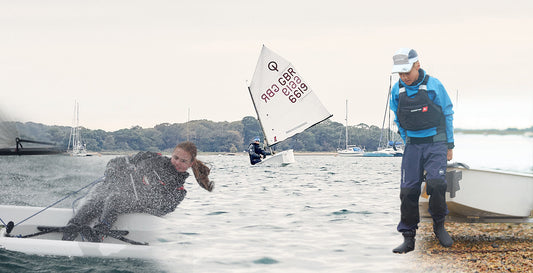
Junior Winter Kit: How to Keep Young Sailors Warm This Season
When the temperature drops, sailing doesn’t have to stop. With the right layers and smart kit choices, winter sailing can be just as rewarding as summer — sometimes even more so. For junior sailors, learning how to stay warm and dry on the water is a key part of growing in the sport.
At Rooster, we’ve spent years developing kit that works as hard as the sailors wearing it — gear that keeps young sailors confident, comfortable, and ready to face the chill head-on.
Why the Right Winter Kit Matters
Cold conditions can make or break a training session. It’s hard to focus on racing tactics or boat handling when you’re distracted by numb fingers or shivering. Proper layering helps young sailors stay safe and comfortable — and most importantly, enjoy every moment on the water.
Rooster Rider Amelie Ballantyne puts it best:
“Once you’re warm and dry, everything changes. You can focus on sailing — not surviving. My top tip is to block the wind BEFORE you get wet. Wind chill is your number one enemy and it’s hard to warm up if you’re already cold and wet. I always wear my Pro Aquafleece Top to keep warm"
What Our Riders Recommend
We asked our Rooster Riders to share their top layering tips for winter sailing — the things they wish they’d known before their first cold session.
Their advice all points to the same truth: getting layering right means you’ll stay on the water longer, sail better, and have more fun.
The Junior Winter Kit System
Here’s a simple layering setup our Riders swear by:
1. Base Layer – Polypro or ‘Hot’ Top & Leggings
A warm, stretchy yet thin foundation that regulates body temperature without restricting movement.
2. Mid Layer (Wetsuit layer) – Supertherm 4mm Longjohn and Top
The powerhouse of your winter kit. Neoprene creates a dynamic thermal barrier by trapping a thin layer of water and maintaining your core temperature, all while offering stretch and freedom of movement for active sailing.
3. Outer Layer – Aquafleece Spray Top
Your essential weather shield, perfect for throwing on over your base. Protects against spray, rain, and wind chill — keeping core warmth in and water out.
4. Accessories – Gloves, Boots, and Hats
Often underestimated but crucial. Warm extremities = happy sailor.
Shop Junior Winter Kit
Layer up, Sail on…
Great kit doesn’t just keep you warm — it builds confidence. When juniors can focus on their technique rather than the temperature, they develop faster, stay positive, and actually look forward to those early winter starts.
That’s what we love to see at Rooster — young sailors who are comfortable, capable, and ready to take on any conditions.
Explore our Rider-approved winter essentials for junior sailors and help your sailor stay warm, dry, and ready for every challenge this season.
Read more about the right layers for you on our Layering Guide
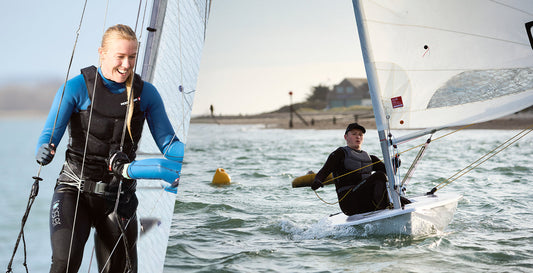
Why Upgrade to a 4mm Wetsuit for Winter Sailing?
Winter sailing can be some of the most rewarding time on the water — crisp mornings, steady breezes, quieter waters. But with colder conditions comes one big challenge: staying warm. Your wetsuit is your first line of defence, and choosing the right thickness is critical. Here’s why upgrading to a Supertherm 4mm wetsuit can transform your cold-weather sailing experience.
Quick Look:
1. How Neoprene Keeps You Warm
Neoprene works by trapping a thin layer of water between your body and the suit. Your body heats this water, creating an insulating barrier. The thicker the neoprene, the more insulation it provides — making it much harder for heat to escape.
2. Why Thickness Matters
1.5mm neoprene (like our Thermaflex) offers flexibility and comfort for mild to warm conditions.
4mm neoprene (like the Supertherm) adds serious insulation for cold-weather training, helping you retain heat for longer sessions.
Think of it like the difference between a light jacket and a winter coat — both have their place, but when the cold bites, you’ll want the thicker layer.
3. Advanced Linings for Extra Warmth
The Supertherm 4mm range isn’t just thicker — it’s smarter. Enhanced linings wick moisture away from your skin, add thermal comfort, and dry faster between sessions. That means less of the “chill factor” when you put your wetsuit back on for the afternoon race.
4. The Role of Stitching: Flatlock vs GBS
Not all seams are created equal.
Flatlock stitching (used in thinner suits like Thermaflex) is breathable but allows small amounts of water through — fine for warmer sailing.
GBS (Glued and Blind Stitched) seams, used in all our Supertherm range, are sealed to minimise water entry. This keeps the insulating layer of water more stable and your body much warmer.
5. Designed for Winter Performance
Sailors often assume thicker neoprene means restricted movement — not with Supertherm. Our panels are engineered for stretch and flexibility where you need it most, so you stay agile and comfortable while still benefiting from maximum warmth.
6. Pairing with Other Layers
The Supertherm range is built to be part of your complete winter system. Layer it up with:
· Thermal base layers like our Polypro or Hot tops & leggings — not only do they help manage moisture, but they also add an extra insulating layer, trapping air and boosting warmth.
· Spray protection such as the Aquafleece® or SB1 Inshore Dry Smock — your outer defence against wind and water.
Together, these layers create a system that locks in heat, keeps you dry, and stands up to whatever winter sailing throws at you. Read more about layering by visiting our Layering Guide.
Don’t let the cold hold you back. With the right wetsuit, winter sailing can be just as enjoyable — if not more — than the summer season. Our Supertherm 4mm range is designed to give you the warmth, comfort, and performance you need to sail on through the colder months.
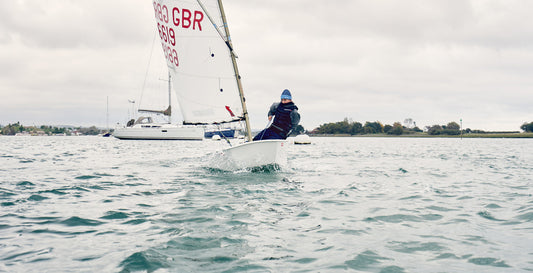
Winter Training Layering Tips
Winter doesn’t mean your sailing or training has to stop – it just means you need to prepare your kit properly. The right layering system will keep you warm, dry, and able to focus on performance instead of the cold. At Rooster, we’ve refined our layering philosophy so every piece works together, giving you flexibility whether you’re racing, coaching, or training ashore. You can check out our full layering guide for tips throughout the year, but for Autumn/Winter specific keep reading below:
The Golden Rule: Layer Like an Onion
Layering is about trapping warm air close to your body while managing moisture and protecting against wind and spray. Each layer has a job to do, and when combined, they deliver comfort and performance in even the harshest conditions.
Think of this as your second skin. Its job is to regulate body temperature and wick moisture away, keeping you dry even when you’re working hard.
Technical base layers: Soft, quick-drying fabrics prevent chills caused by sweat.
Close-fitting design: Ensures no cold gaps and allows easy layering on top.
Rooster Pick: Hot Top & Leggings – the winter sailor’s secret weapon.
Top tip: Skip rash vests or Lycra layers as insulation – they won’t add warmth and can actually make you feel cooler. When it comes to layering, sometimes less really is more.
This is where you add warmth. Choose pieces that are flexible, breathable, and easy to peel off when conditions change.
Flexible layering: Adjust your neoprene thickness to match the forecast. When the temperature drops below 15°C, reach for your Supertherm® 4mm Top and Longjohn for maximum warmth. In milder conditions, your Thermaflex® 1.5mm layers may be all you need – and if you’re someone who feels the cold, add extra base layers for comfort. When it is really really cold, you could double up on neoprene!
Check out our blog on what the forecast says vs the actual temperatures.
Your shell is the barrier against wind, spray, and rain. Look for waterproofing, breathability, and freedom of movement.
Aquafleece Spray tops or SB1 Inshore Smock: Great for dinghy sailing.
SB1 Jacket or Pro Rigging Jacket: Added protection when conditions are rougher.
Your hands, feet, and head lose heat fastest, so finishing your system with quality accessories is vital.
Neoprene gloves & mitts for grip and warmth.
Neoprene socks layered under boots for warm, dry feet.
Hats, beanies, neck gaiters & balaclavas to prevent heat loss from your head and neck.
💡 Did you know? Research published in the British Medical Journal found that if your head is the only part of your body uncovered, you can lose around 7–10% of your body heat through it. A simple hat or hood can make a huge difference to your comfort and endurance on the water.
Customer Favourite Pick for Autumn/Winter Training: AquaPro Gloves, Hot Socks, Supertherm Beanie & Aquafleece Neck Gaiters.
One of the toughest parts of winter training is when the day is split into two sessions with downtime in between. That mid-day break can be when the cold really creeps in, leaving you feeling flat, sluggish, and unmotivated for round two. The good news? With a few smart habits, you can stay warm, recover properly, and head back out ready to perform.
Top tips for staying warm between sessions:
Layer up quickly: Throw on a warm, windproof outer layer such as our Pro Aquafleece® Rigging Coat or Aquafleece® Robe to trap heat and stop the chill setting in.
Swap your kit: Take a spare pair of socks and gloves to change into during the break – dry, warm hands and feet make a huge difference.
Don’t forget your head: A simple beanie helps keep body heat in and makes you feel instantly warmer.
Refuel smartly: Pack proper food and a hot drink to top up energy levels and keep your core temperature steady.
Keep moving: Light activity between sessions helps circulation and stops you from cooling down too much.
Avoid rash/lycra layers – they hold water and makes you cold.
Stay flexible – pack an extra mid-layer, socks and gloves in your kit bag so you can adapt.
Check your fit – layers should sit comfortably without restricting movement.
Look after your gear – rinse saltwater off regularly and let items dry fully.
Final Thought: Winter sailing and training are all about preparation. Get your layering right, and you’ll be warm, comfortable, and ready to perform – whatever the weather throws at you.
Our full layering guide and more information on layering for different conditions can be found here.

Gear Up: Your Essential Kit Guide for Summer Sailing Champs
Summer sailing and regattas often mean long hours on the water — sometimes with three or more races back to back. If you’re new to it, or haven’t raced in a while, knowing what to wear or take with you can feel overwhelming. For the seasoned sailor, it’s often second nature — but even the most experienced can get caught out when they’re a bit rusty or just haven’t had to prep for a full championship day in a while.
Even simple logistics can throw you off: can you drop a drybag on a rib? If so, great — you have more flexibility. But if you’re scrambling to find that rib between races or the next warning signal goes up right after the finish, you could be left without the gear you were counting on.
Just like any endurance sport, sailing demands planning — for clothing, food, and hydration. The goal? Bring what you need without overpacking. Most dinghies don’t have room for your entire wardrobe and snack cupboard.
Pack too much and it's dead weight; pack too little and, inevitably, that’s the day you needed that extra layer or snack bar.
The Weather Never Makes it Easy
British summer sailing is unpredictable. Sure, we all know the signs — clouds building inland, a sea breeze on the way — but forecasts rarely tell the full story. The “real feel” out on the water can be wildly different from what was expected. We've written a blog on this which is well worth a read. Read more.
When you’re 2 hours from shore in a dinghy, you have to be self-reliant. Even at a big event surrounded by boats and safety cover, you need to look after number one. That means having the right gear, fuel, and backup layers — because when the unexpected happens, you want to be ready.
Fuel Matters: Food & Hydration
Outfit choices are only half the battle. Staying fuelled and hydrated is critical for performance and recovery — especially over back-to-back races.
Your Championship Kit Guide: What to Wear, What to Pack
We’ve created a simple guide to help you layer up, pack smart, and stay comfortable during race days — whether it’s a short session or an all-day affair.
Your Standard Base Kit
Based on a mild Summer | 20–28°C
Top layer: Rash top or PolyPro top
Rash = cooler, UV protection
PolyPro = extra warmth + UV, fleece-lined
Bottom half: Thermaflex 1.5mm Longjohn or Race Armour Lite Shorts
Buoyancy Aid
Aeromesh Cap – protects your head & aids ventilation
UV Neck Sleeve – adds sun protection
Boots – suitable for your boat and grip needs
Sunglasses – ideally with a retainer
Long Day on the Water
(3–5 hours | 3–4 races back-to-back | 20–28°C)
UV lip balm / small suncream
Cereal or oat based bar (slow-release energy)
Gel, sweets or fruit (fast-release energy)
On Board:
2x large water bottles
1 water, 1 electrolytes (use a Joey Bottle Holder)
Drybag - 10L Rolltop Drybag - perfect for on the boat or 35L Dry Backpack - if you have access to a rib to store:
Lightweight spray top or SB1 dry smock
Spare warmer layer (PolyPro or Thermaflex top)
Suncream
Lunch/snacks
Shorter Day on the Water
(1–2 hours | 1–2 races back-to-back | 20-28°C)
Pockets:
UV lip balm
Mini suncream
Snack bar
On Board:
1–2 large drinks bottles (again, ideally one with electrolytes)
Joey Bottle Holder
Drybag - 3L Rolltop Drybag:
Lightweight spray top or Thermaflex top
Extra snack
Suncream
Bonus Kit: Things You Might Be Glad You Brought!
Spare rope/lines
Whistle
Knife
Duck tape (“If you can’t fix it with duck tape…”)
Electrical tape
Spare shackles/blocks/split pins
Sail repair tape
Multi-tool
Emergency blanket
Phone or VHF radio
Long days on the water are where championships are won and lost, and your preparation can make a huge difference. Pack smart, dress for the conditions, and fuel your body properly. That way, you’ll be focused on racing, not worrying about what you left behind.

SB1 Inshore Smock: Neck Seal Adjustment Guide
The SB1 Inshore Dry Smock is built to keep you dry and protected in a wide range of sailing conditions. At the heart of its performance is the neoprene neck seal, which provides a near-dry seal for inshore and coastal sailing. But comfort is key too — and we know that not everyone has the same neck length or preferences when it comes to feel.
That's why we’ve designed the neck to be fully customisable.
Below is an easy step-by-step guide to adjusting the neck seal for a personalised fit. Rooster founder, Steve Cockerill also explains via video why you might want to trim the neoprene neck seal and explains an alternative method if you don’t need a fully dry seal and want a softer feel next to your skin.
Watch the video below or head to our youtube channel for more videos:
Why the Neck Seal Is Made This Way
The SB1’s neoprene neck is intentionally manufactured at its longest setting — suitable for those with longer necks or those seeking maximum protection. But we know that for many sailors, this can feel a little high. Fortunately, it’s easy to customise.
Option 1: Trim to Your Neck Length
If you want a more tailored fit, you can trim the neoprene down at the front. Here’s how:
How to Trim the Neck Seal:
Try It On FirstPut the smock on and assess how much material you’d like to remove for comfort. Start conservatively — it’s better to take a little off at a time.
Mark the Cut LineUse a soft pencil or tailor’s chalk to draw a shallow curve at the front of the neck. Most people choose to take off a small crescent from the centre front, tapering off at the sides.
Use Sharp ScissorsCut slowly and cleanly along your marked line. A sharp pair of fabric or neoprene scissors works best. Avoid jagged edges.
Test and AdjustTry the smock on again. You can always take a little more off if needed — but you can’t put it back!
Note: Cutting the neck will compromise the original dry-seal design slightly, but many sailors find this trade-off worth it for improved comfort in moderate conditions.
Option 2: Roll the Neck Inward
If you'd rather not cut the neck — or want to keep the dry-seal option for future sessions — there’s another simple trick.
How to Roll the Neck for Comfort:
Fold the top of the neoprene neck in on itself, so the sticky glideskin layer (which provides the dry seal) is no longer touching your skin.
This results in a softer feel and slightly looser fit — ideal for warmer days or when you don’t need full waterproofing.
This method gives you the flexibility to adjust the seal depending on conditions, without permanently altering the smock.
At Rooster, we believe kit should work with you. Whether you choose to trim the neoprene or roll it in, the SB1 Inshore Smock is designed to give you control over your comfort and performance on the water.

Designed by Women, for Women: The Journey Behind Our Women’s Technical Shorts
At Rooster, we believe technical clothing should work with you, not stand in your way. That’s why the development of our Women’s Technical Shorts 2.0 has been a carefully considered process - over three years of dedicated development, shaped by feedback, expertise, and a clear vision for performance. These aren’t just another pair of shorts -they’re the result of listening to women, testing with women, and designing for real bodies and real sailing conditions.
Built to Fit Real Women
From the very start, our mission was clear: to create a pair of technical sailing shorts that actually fit women — of all shapes, sizes, and heights — while still offering a clean look that could blend into everyday wear. We didn’t want a “pink it and shrink it” version of our men’s shorts. We wanted something that worked because it was built for women, not in spite of it.
Luckily, we have the perfect team to help. Our office is full of active women — sailors, runners, climbers, rowers — all passionate about outdoor sport and technical performance. Their honest, practical feedback helped us fine-tune the cut, waistband height, dial in the leg length, and perfect the stretch and movement across sizes.
When we were closer to what felt like a final product, we brought in a small focus group of female sailors and outdoor enthusiasts to test a full size set — from the smallest to the largest. These weren’t models or marketing faces — they were real women, with valuable insights. We built this group through an open call on our social media channels inviting keen sailors to give their feedback and help us refine the final design.
Their feedback? Invaluable. From tweaks in the waistband construction, to how the fabric felt, to thoughts on the colourway and styling — they shaped what you now see as the final product.
I am impressed with the fact that Rooster is trying to find improved fitting women’s clothing . It was interesting to be part of this process and see the effort that goes into choosing the design. - Sam Norton (part of our focus group)
Why It Took Over 3 Years
In truth, launching a women’s-only technical product is a big decision for us. The market for female sailing gear is smaller, and factory minimum order quantities (MOQs) don’t always make it easy. But this project mattered, not just for the product itself, but because we know how valuable good kit is for women who are active in the sport.
Over the past decade, Rooster’s range has evolved to include female alternatives to most of our key products. When we can, we create female-specific options. And when that’s not viable, we always consider women’s fit when designing unisex products, making sure they’re as versatile and inclusive as possible.
We understand that introducing a women’s-specific short meant getting every detail right, and doing it when the brand was in a strong position to deliver it well.
This isn’t just about launching a new product — it’s part of a bigger commitment. At Rooster, we’re proud to support women at every level of sailing, from grassroots participation to high-performance racing. Our involvement in initiatives like the Women’s Open Keelboat Championship (WOKC), the Magenta Foiling Project, and our continued support across sportsboat classes, including the J/70s, reflects just the start of where we’re heading.
Women still make up a smaller share of active sailors — estimated at just 20–25% globally, and often less in technical classes like sportsboats and keelboats. But that number is growing, and we’re proud to be part of that progress.
For us, inclusivity and innovation in women’s technical gear isn’t an add-on — it’s a core part of what we do.
Where Function Meets Purpose
We’re excited to launch our Women’s Technical Shorts 2.0 and can’t wait to share the product we have been working on, they combine:
A flattering, technical cut designed for active movement.
Optimised waist height for support and comfort.
Stretch and flexibility where it matters most.
Ideal leg length for both comfort and coverage.
Reinforced, durable fabric at the seat — built to handle high-wear areas and long hours on deck.
Smart, functional features right where you need them — including leg pockets, belt loops for a safety knife, internal compartments for optional deck pads, a secure waist closure, and more.
And of course — they’re built from the same trusted technical foundations as our much-loved men’s shorts, which have seen five years of proven performance on the water.
We can't wait for you to try them, find out some more on our video below:

Class by Class: What our Sailors Really Wear
When it comes to sailing, what you wear can make or break your time on the water. Whether you're out racing, cruising or training, the right outfit ensures comfort, performance, and safety.
Different boat classes demand different gear — from technical clothing designed to keep you dry and warm to lightweight, breathable layers perfect for racing hard in Spring conditions.
In this guide, with the help of some of our Riders, we’ll break down the best sailing outfit ideas tailored to each class, helping you gear up with confidence in a temperature range of 10-15 degrees, no matter what kind of sailing you’re into.
RS AERO
Sammy
Base Layer - Rash Top-Long Sleeved
Mid Layer - Pro Hikers 4/3mm (Fixed Battens)
Top Layer - SuperTherm 4mm Top
Extras - Custom Race Bib, Rooster Cap (Structured), Supertherm 4mm Wet Socks, Pro Laced Boots and Race Armour Buoyancy Aid
RS21
Liam
Base Layer - Tech Shorts and Long-Sleeve UV Top and/or Poly Pro's
Mid Layer - Hybrid Jacket or a Fleece
Top Layer - Light Weight Spray Top and/or SB1's
Extras - Hat, Deck Shoes
49erFX
Emilie and Julie
Base Layer - Women's PolyPro Top
Mid Layer - Women's SuperTherm 4mm Long John
Top Layer - Classic ThermaFlex 1.5mm Top – Unisex and Women's Classic Aquafleece Top
Extras: Buoyancy Aid, Race Bib, Gloves, Boots, Trapeze Harness
OPTIMIST
Amélie
Base Layers - Poly Pro Top and Leggings
Mid Layer - Thermaflex 1.5mm Long John’s
Top Layer - Classic Aquafleece Top
Extras - All Purpose Boots, Rooster Cap and Poly Pro Gloves
ILCA 4
Eva
Base Layer: Supertherm Top
Mid Layer: Pro Hikers and Wear Protection Shorts
Top Layer: Pro Lite Aquafleece Top
Extras: Race Armour Buoyancy Aid and Hot Socks
ILCA 6
Jake
Base Layer: Rash Top
Mid Layer: Thermaflex 1.5mm Long-John
Top Layer: Race Armour Buoyancy Aid & Race Bib
Extras: Pro Laced Ankle Strap Boots, 3/4 Classic Hikers 4/3mm & Structured Cap
TOPPER
Meg
Base Layer: Rash Top and Hot Legs
Mid Layer: Supertherm Long John and Top
Top Layer: Pro Aquafleece Top
Extras: Structured Cap, Pro Laced Boots
29er
Henry and Finn
Base Layer - Poly Pro Top and Legs and Supertherm Socks
Mid Layer - Supertherm Long John
Top Layer - Pro Lite Aquafleece Top
Extras - Pro Race Gloves 5, Pro Lace Boots and Diamond Over Head Buoyancy Aid
Thanks to the insights from our supported sailors, it’s clear that comfort, functionality, and adaptability are key when dressing for 10-15 degrees on the water. From technical base layers to waterproof outerwear, thoughtful choices help you stay safe, warm, and focused on the important stuff. So next time you head out, take a cue from the pros!
For any additional advice on what to wear, our friendly Customer Service Team are always on hand to help for your personal preference, just give us a call!

Keep your Gear Fresh with C-Monsta
If watersports are more than just a hobby for you (no doubt), then maintaining your gear is essential so it performs on the water. Here are some simple tips from our friends over at C-Monsta for keeping your gear in peak condition:
1. Rinse After Every Session 💦💧
Saltwater and sand can be tough on your gear. Always rinse your wetsuit, board/boat, and sails with fresh water after each session. This prevents salt and sand buildup, which can cause wear and tear.
2. Use the Right Tools 🛠️
Drying your wetsuit properly is crucial. The C-Monsta hanger is designed to help your wetsuit dry faster and more evenly, preventing mildew and bad odours. Plus, it's tough enough to handle all your gear without breaking. 💪
3. Store Properly ✅
Keep your gear out of direct sunlight when not in use. UV rays can weaken the material over time. Use a shaded area or indoor space to store your board and sails. For your wetsuit, the C-Monsta hanger ensures it hangs correctly, reducing the risk of stretching and damage.
4. Regular Inspections 👀
Check your gear regularly for any signs of damage or wear. Look for small tears in your wetsuit, frayed lines, or dings on your boat/board. Addressing these issues early can prevent bigger problems down the line.
5. Keep It Clean 🧼 🧽
Use a wetsuit shampoo occasionally to clean your wetsuit thoroughly. This removes any bacteria and keeps it smelling fresh. For your board and sails, a gentle wipe-down with a mild soap solution works wonders.
By following these simple steps, you can prolong the life of your gear and ensure it performs at its best every time you hit the water. 🌊Share your gear care tips with us on social media and tag both #RoosterKit and #CMonstaGearCare for a chance to be featured!
Rooster® has partnered with C-Monsta and is now stocking C-Monsta hangers online. Made from 100% Recycled Plastic, the C-Monsta hanger is specifically designed to hold wetsuits, boots, gloves, and other gear in one compact place, making it easy to dry and store everything together. This is especially valuable for sailors and watersports enthusiasts who participate in back-to-back events, ensuring their gear is dry, organised, and ready to go without any hassle.

Pain Free Hiking
The most important aspect of a good pair of hiking shorts is positioning of the battens and the lift they provide. The options we do for hiking are:
Pro Hikers
Classic hikers ¾
Pro Hikers No Pads
Race Armour Lite Shorts
Thermaflex Longjohns & Legs
Supertherm Longjohns
Pro Rash Legs
Now that list might be overwhelming so here is a quick summary of the different options. A lot of the time the choice of which hiking system to go for is down to personal preference but hopefully this guide will give a bit of insight into our hikers.
Pro Hikers
Full length with fixed battens, the pads tend to fit longer legged and pro sailors better. With longer legged sailors and super fit sailors, they are able to extend their legs further from the toestrap in a more comfortable manner, so they manage to get the hike pad over the side deck. My lack of ILCA training would have meant that I would have only managed to place the pro hike pad on the side deck. At 4/3mm and full length Pro hikers are ideal for cooler temperatures and winter sailing paired with hot or polypro legs. Then great by themselves all summer!
Classic hikers ¾
¾ length so just below the knee with knee reinforcements. These are also fixed pads that are slightly higher up the leg which tends to fit the less fit senior sailors and fitter younger sailors as well. A particular favourite for Topper sailors and younger sailors.
Pro Hikers No Pads
Full length 4/3mm neoprene with the same construction as the standard Pro Hikers, just without the fixed pads. Compatible with our ProHike Pads so you can choose the size of pad you would like and also the position of where works best for you. I recently used them at the UK ILCA Masters Qualifier which was a brutal weekend of gusts in the area of 37 knots, although the RO thought it never reached over 27 on his committee boat (whilst holding his wind indicator under his jacket perhaps?)
Fitting the pads is easy, just turn the pro hikers inside out and place the hike pads about 3 inches from the knee seam. The top of the hike pads are shaped to protect your delicate parts. The top of the hikers ended up being well into my bum cheeks. I was not embarrassed as I can still remember seeing Paige Railey (World #1 Radial Sailor),waddling like a Penguin whilst walking on the shore. Our Prohike pads are pre shaped to your leg, which gives you additional lift off the side deck. This gives the sailor the ability to sail the boat much flatter without hitting the water, which is fast! For me it also makes for a slightly nicer hiking position - gives my legs a slight bend, which having not sailed the ILCA much this year was a godsend. Having fitted the pads to where felt best, the pads were central to the deck edge, and I was in the lap of luxury.
Race Armour Lite Shorts
Our most versatile option, these neoprene and spandex shorts have the capability to add Prohike pads into the seat through our standard hook and loop attachment. These shorts can then be worn by themselves for summer sailing or over the top of any other wetsuit or drysuit. At the ILCA Qualifier my wife Sarah wore the shorts over her Supertherm Longjohn which she thought was a game changer. They never dropped or moved. Happy wife is a happy life!
LongJohns and Legs
Similar to the shorts, our longjohns and legs are compatible with the Prohike pads. Meaning you can use your longjohns and legs for hiking but also for a large variety of watersports such as Stand Up Paddleboarding, Surfing or Kayak
Hopefully this guide has been helpful in explaining our different hiking options. If you are still feeling overwhelmed or confused, contact our customer service team on hello@roostersailing.com or +44 (0) 1243 389997
Boat Maintenance tips

Your First Big Championship Checklist
There's something truly special about a sailing championship. It's more than just a regatta; it's an opportunity to challenge yourself, explore a new venue, and become part of a community that shares your passion for sailing. Whether you’re fizzing with excitement or feeling super nervous, good preparation can make all the difference.
This guide has been put together to help you arrive prepared, confident, and ready to make the most of every moment. The better prepared you are, the more you'll be able to focus on what really matters – enjoying the experience, learning from every race, and creating memories that you'll look back on for years to come.
Give your boat a thorough MOT
We’ve pulled together this basic list below; it’s not an exhaustive list, and it’s not class specific, but it’s a fantastic place to start. You’ve been training hard all winter, so it’s time to get your boat back on point for its Championship showcase.
If you discover an issue and aren't sure how to fix it, don't panic. Your Class Association community is often the best place to start. Class sailors and coaches have a wealth of experience and can usually offer practical advice or point you towards the manufacturer or class-approved hacks.
The Team at Rooster are always on hand to help, and true to our heritage, the team love nothing more than bimbling with boats and looking for those small wins to allow you to be in your element. Whether you need advice on maintenance, replacement parts, or essential spares, get in touch; we'd be delighted to help you arrive at the championship feeling ready to perform at your best!
Category
Subcategory
Check Item
Hull
Structure
Give the hull a good once-over and look out for any cracks.
Hull
Structure
Check the mast step for cracks or anything that doesn't look quite right.
Hull
Structure
Look for scratches, cracks or peeling grip around the centreboard case.
Hull
Finish
Tidy up any chips and scratches before they get worse.
Hull
Finish
Make sure the self bailer opens and closes smoothly and isn't full of grit.
Hull
Finish
Check your bung is in good condition and throw a spare in the toolbox.
Spars
Mast
Sight up the mast and make sure it's nice and straight.
Spars
Mast
Check fittings and rivets for corrosion, movement or wear.
Spars
Mast
Make sure all mast sections fit together snugly.
Spars
Boom
Check fittings and rivets are secure and corrosion-free.
Sail
Panels
Hold the sail up to the light and look for holes, tears or thin patches.
Sail
Stitching
Check seams are intact and not starting to pull apart.
Sail
Battens
Make sure battens are undamaged and seated properly.
Rigging
Halyard(s)
Look for worn spots, fraying or damaged rope.
Rigging
Mainsheet
Check for wear and any sections that feel tired.
Rigging
Jib Sheet
Make sure it's running smoothly and isn't showing signs of wear.
Rigging
Spinnaker Sheet
Make sure it's running smoothly and isn't showing signs of wear.
Rigging
Controls
Check the kicker is working smoothly and still bites.
Rigging
Controls
Make sure the outhaul runs freely and holds tension.
Rigging
Controls
Check the downhaul isn't worn and can be adjusted easily.
Rigging
Controls
Make sure the traveller isn’t wearing through.
Rigging
Painter
Check for wear and confirm it complies with class rules.
Rigging
Clew Strap
If the velcro is slipping, it's time for a replacement.
Rigging
Blocks
Spin every block and make sure ratchets still sound and feel healthy.
Centreboard
Foil
Check the leading edge for chips, dings or rough spots.
Centreboard
Foil
Make sure the trailing edge is smooth and undamaged.
Centreboard
Case
The board should go up and down smoothly without sticking.
Centreboard
Elastic
Make sure the elastic still has enough life to do its job.
Rudder
Blade
Check for damage, chips or rough areas.
Rudder
Stock
Make sure all fittings are secure and in good condition.
Rudder
Tiller
Look for cracks or sun damage in the universal joint – they often fail without warning.
Toe Straps
Webbing
Check for wear where straps rub and inspect all fixings.
Toe Straps
Elastic
Make sure the straps still spring back into position.
Fasteners
Hardware
Check screws are tight and haven't worked loose.
Fasteners
Hardware
Check bolts are secure and corrosion-free.
Fasteners
Hardware
Fresh tape always looks smarter and makes spotting problems easier.
Buoyancy
Hatches
Check seals are clean and keeping water where it belongs.
Buoyancy
Buoyancy Bags
Inflate them and make sure they're holding air properly.
Buoyancy
Leak Test
A bubble test can uncover leaks before they become a headache.
Trolley
Frame
Look for rust, corrosion or signs of fatigue.
Trolley
Wheels
Check tyres are inflated and ready for a long walk to the slipway.
Trailer
Bearings
Give them a check now rather than on the hard shoulder later.
Trailer
Lights
Test everything before setting off.
Trailer
Straps
Make sure straps are in good condition and still doing their job.
Measurement
Class Rules
Double-check sail numbers are correct and clearly visible.
Measurement
Class Rules
Make sure all required equipment is onboard and class legal.
Get the right gear
The right kit really makes all the difference on the water, and the beauty of European weather means you can launch in a sublime summer's day and be chewing through a hail storm as the four minute gun goes for the start of race three. Staying warm, protected, and comfortable means you can focus on performance — and staying out for longer.
We’ve tried to take all the faff out of packing your kit bag and created these handy what to wear guides, from Juniors through to trapezing, there’s something for everyone
Pack the opposite kit in your dry bag in your boat; if you’ve launched in glorious sunshine, make sure you’ve got a lightweight spray top and beanie you can pop on if that sea breeze kicks in or you have an accidental capsize. On the flip side, if you launch in a cosy Aquafleece, make sure you can pull it off in between races, if that sunshine does show its face. Top it off with a cap, with an epic pair of sunglasses and a slathering of suncream.
It can be really tempting to pop all your spares in a support rib, but it’s not always possible to find them in between races, even with the most attentive crew. So, keep those essential bits of kit and fuel close in a little dry bag in your boat, so you’re not caught short! Hangry and freezing is not the way to spend a day.
Don’t forget on shore too; changing rooms at big championships can be manic. Write your name on every single bit of kit you own and consider al fresco changing alternatives, like a quick dry poncho and a changing mat if you’re not a fan of the crowds.
Spares
After you’ve read this blog, your boat will be MOT’d and bimbled to perfection before your regatta, but breakages do happen, even to the most prepared sailors. Either tucked in your buoyancy aid, or safely stowed in your boat, we’d suggest always having these two secret weapons.
Small Carbine Hook – Shackle gone? Bosh clip it back on.
Rope that is 1.5 metres long, around 3/4mm - tie something back together, it won’t be pretty, but it will get you round.
Breakages are great challenges to overcome, but it’s good to practice them in a low stress environment. What would you do if your mast webbing strap failed on your topper? Or if your kicker clip blew up on your RS Tera? Have a go on shore, and then on the water, testing how you could bodge a fix, it could save you a big point discard or even better, you could help a friend on the water.
Fuel
Eating and drinking the right things before, during and after racing will help you stay focused, make better decisions, and maintain your energy throughout the duration of the regatta.
Before heading afloat, aim to eat a balanced meal containing slow-release carbohydrates such as porridge, wholegrain toast, cereal, or pasta. These foods provide a steady source of energy that will last longer than sugary snacks.
Hydration is equally important and an easy to sip on the go bottle is essential. Start drinking water as soon as you wake up and continue throughout your morning preparations at your accommodation and in the boat park. Even on cooler days, it's easy to become dehydrated without realising it, which can affect concentration and performance. A very simple rule of thumb is that you should be drinking approximately 1 litre for every race you do. This isn’t foolproof, so please adapt it for your needs and the conditions on the day.
For longer days, pack simple snacks that are easy to eat between races. Bananas, flapjacks, cereal bars, dried fruit, wraps or a sandwich are all great choices. These provide quick energy without causing a sugar crash. Try to avoid relying completely on sweets, chocolate and energy drinks. While they may give a short burst of energy, they can leave you feeling tired later in the day. With everything in life, there’s a balance to be found, make sure you’re excited to tuck into something tasty between races.
Remember: good sailors look after their boats, but great sailors also look after themselves. Fuel your body well, and you'll give yourself the best chance of performing at your best on the water.
Relish the detail by doing your homework
One of the easiest ways to gain confidence before your first championship is to arrive as prepared as possible. Long before you launch your boat, there is a huge amount of information available online that can help you understand the event and venue. Start by reading the Notice of Race and Sailing Instructions so you know the format, schedule, and key rules. Watch any competitor briefings if they are available and take note of local advice.
Explore the venue on Google Maps to familiarise yourself with launching areas, race courses, parking, and facilities. Check out the club and class websites to learn more about the venue, local conditions, and previous events. You can even use Google or ChatGPT to research typical weather patterns, tides, currents, and sailing tips for the area. Did you know we have some of our own venue guides by the legendary Steve Cockerill and our fantastic Rooster Riders? If you’re heading to the UK this season, to either Weymouth, Largs or Pwllheli, you’re in luck! The more you know before you arrive, the less there is to think about when racing starts.
Good preparation won't guarantee results, but it will help you feel confident, organised, and ready to make the most of your championship experience.
Set goals that you can control
Attending your first championship is exciting, but it's important to remember that success isn't just about where you finish. Rather than focusing on winning, set yourself SMART goals; goals that are Specific, Measurable, Achievable, Relevant, and Time-bound. For example, you might aim to get a front row start in at least three races, change your settings on every leg of the course, or not to be the outside boat at every mark rounding.
These are things that are within your control and can be measured throughout the event. By focusing on personal performance goals rather than results, you'll gain confidence, learn more from the experience, and finish the championship with a real sense of achievement, regardless of your overall placing.
And finally
Above all, have fun. Throw yourself into the experience, make some new sailing mates, and try to enjoy every minute both on and off the water. There will be plenty to learn, plenty to laugh about, and hopefully a few adventures along the way. Sail your best, embrace the challenge, and make some awesome memories you'll be talking about for years to come.
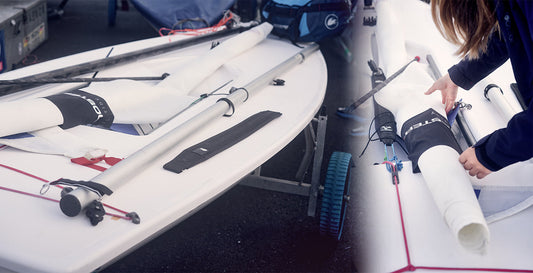
Mark's Guide: 7 Essential Tips and Checks for Winter Dinghy Maintenance
Extract from book, to be the published "Maintenance and Recommissioning of Racing Dinghies”
1. Storage
Wooden Boats. There is only one place for an all wood or composite racing dinghy to be stored, and that is undercover in a dry storage garage, workshop or shed. Even with modern varnishes (1 and 2 pot) and epoxy coatings, there is still a chance for water, ice & frost to penetrate the surface & joints and damage the wood. Expensive to repair once damaged, and water damage often ends up being painted over due to discoloration.
Plastic boats. All glass and FRP boats will survive the UK winter climate outside but invest in a good breathable cover with a deep skirt as seen in the photo 1 - on a Solo dinghy. It will also prevent UV fading of the gelcoat as seen on this blue 2000 - See photo 2 below.
Photo 1
Photo 2 - Shows typical UV fading if left unprotected, the gelcoat is slowly degraded by UV radiation causing the surface to become yellowy / white and powdery as the gelcoat is oxidized. – Can be expensive to correct.
Also, I have seen ILCA/Lasers hulls that have been dry stored (and with non-breathable PVC covers - both with top and undercovers) being stored inside with damp or wet surfaces and can suffer over time from osmosis.
Make sure the carpet or protection used on the trolley cradle is dry before storing, as this will hold water and damage the hull (both wood and plastic hulls) surface over time.
2. Sail Care
Remove the sails from your boat. Boats both stored outside and inside are a target for rodents to hibernate in and eat your sails and sail bags. The damage can be extensive.
Give them a thorough rinse with fresh water from a hose. I hang mine up to dry on the washing line (use the mainsheet rope) and then store indoors/garage/workshop. Check for any damage around the batten pockets and headboard/luff rope area and get any repairs at your local sailmaker.
3. Spars
Remove the spars from your boat, wash, dry down and then dry store if possible. Galvanic corrosion (see below photo 3 example of a RS400 s/s block mounted on the boom) can occur between the stainless-steel fittings and your aluminium mast. Note: Carbon fibre masts will not suffer from galvanic corrosion but metals in electric contact (and the presence of an electrolyte such as salt water) with carbon can cause issues.
Photo 3 - Above (red arrow) shows typical galvanic corrosion that occur between the stainless-steel fittings and your aluminium spar.
If you find an issue, then remove the stainless fitting, and clean the area behind them thoroughly. Bed the fittings down with Duralac paste applied to the entire surface when putting them back, taking care that there are no voids between fitting and mast wall where water can get in and stand. Duralac also provides corrosion protection. Also, add a smear Durlac on the screws or rivets when affixing the fitting.
Duralac paste (photo 4) is a chromate containing jointing compound designed to inhibit electrolytic decomposition between dissimilar metals – often called galvanic corrosion. It is a single pack, air setting product. Used correctly, Duralac prevents anodic decomposition.
Photo 4
4. Hull Upkeep
Wash and polish the hull. Many sailing areas around the coast suffer from the issue of sewage discharge into the sea and harbours. This is especially noticeable on the light breeze days, when a light brown scum line can be seen on the waterline of your dinghy.
Wash down every time you exit the water and sponge off the hull. The discharge is stubborn to remove and will stain especially FRP/Glass boats as seen in photo 5 and can be difficult to remove without a good deal elbow grease and a product like the Facecla G3 Fine Finishing Compound to remove the staining. Finish off with a good quality polish such as the McLube polish.
Photo 5 – Pollution staining
5. Ropes and control lines
Remove and wash the control lines and sheets (remove all non-continuous control lines). You can put the control lines in a bucket of warm water with a mild detergent to soak. The mainsheet, jib and kite sheets in a pillowcase, tie off the opening and put in a washing machine on a cool temp wash with some suitable conditioner. When the cycle is complete remove from the machine and allow to dry off before storage.
6. Security
If the boat is stored - especially in the winter months in the local dinghy compound or park, make sure that the boat is tied down well, the cover is undamaged and that the securing clips are locked in place and tightened. It is important to check that your insurance covers you for winter outdoor storage. Make you own ground concrete tie down anchorage fixings if needed. (Photo 6)
Photo 6 - Build your own concrete tie downs - if permissible by your club.
Use wheel clamps & hitch locks, plus padlocks and chain (photo 7) for added security.
Photo 7 - A substantial wheel clamp and padlock.
7. Maintenance
Deck fittings
I recommend slightly loosening off the tops off your cam cleats and giving them a thorough clean with mild detergent and fresh water. When dry, apply a dab of Harken McLube OneDrop Ball Bearing Conditioner. Do not use grease or oil as this will attract salt particles next season. Damaged cam springs can be replaced, and you may need new cams/cleats if you have signs of wear on the cam teeth. Ball bearing mainsheet block systems and traveller cars need particular attention, flush through with fresh water. It’s a good time to check traveller cars are running freely and replace if necessary. Check all rudder fitting both for galvanic corrosion between the alloy fitting and the screws/bolts. Check for tightness of all fixings.
Toestraps
One the most used items on the boat and take considerable amount of stress and strain during the season. They generally start to wear at the edges, around the pressed in eyelets and the mounting points (if they are screwed down via the gripper plates) check the fixing points and tighten any screws and replace any adjustment ropes as necessary toestraps should be given a good clean and thoroughly washed with freshwater. Toestraps are easily replaced and are relatively inexpensive and can smarted up an otherwise tatty hull. Check your gripper plate screws for tightness as seen in photo 8.
Photo 8 - A typical toestrap gripper plate.
Foils.
Rudder and daggerboards/centreboards are easy to work on indoors. Check the leading and trailing edges for signs of damage before storing away. Any gelcoat work should be done at this time in a warm (indoor) environment.
Bailers leaking?
Now is the time to replace those internal rubber seals with a service kit. Otherwise, if not leaking, then just putting the bailer down and then smearing a small amount of Vaseline along the sides and back of the wedge that protrudes below the boat to keep it in good shape. Then put the bailer up and wipe off any excess.
Trailers and Trolleys.
Trailers: Grease the bearings (or replace the entire hub if corroded (photo 9) or you have worn bearings - and they become noisy or stiff when rotated). Locate the grease fitting—it is the nipple (photo 10 - see the red arrow) that fits into the female end of a grease gun. Squeeze grease from the gun until bearings are well lubricated (but not too full).
Photo 9 - A trailer wheel & hub in poor condition.
Photo 10 - Location of the hub grease nipple.
'Milky grease' in the bearing is a sign that it has been compromised by water. If this happens, repack all bearings or replace. Lubricate your wheel nuts. Doing so will help you to loosen them when changing wheels. This is especially important if you are fixing a flat by the side of the road. Wheel nuts tend to rust easily. Use Copper Ease grease to lubricate the threads to stop them seizing. Check your tyre pressures. Check the tyre sidewall (also for sidewall perishing) for the correct pressure and ensure the tread depth is not below the legal limit. 1.6mm is the legal minimum tyre tread depth for all vehicle tyres, including trailers, a minimum of 3mm is recommended, as this ensures the safest driving - and towing - experience across all road and weather conditions. Below this level, handling can be compromised.
Trolleys
Check you glass fibre cradle(s) for cracks or damaged, and repair. Replace the any damaged foam covering or use the Astro Turf matting – (See photo 11). Get any metal/welding repairs done now rather than in the middle of the sailing season. Repairs will almost always be cheaper than the cost of a new trolley. Consider replacing your pneumatic wheels with puncture proof wheels/tyres if your boat is launched from a hard surface. (Not recommended for sandy foreshores).
Photo 11 - Astro Turf matting.
Astro Turf matting (photo 11) as used on the trolley cradle. Reduces water retention and possible scratching of the hull from any grit and sand held on the cradle. Consider a set of puncture proof wheels as seen in photo 12 - ideal for launching from hard surfaces.
Photo 12 – A puncture proof trolley wheel
Photo 13 - A wide 'beach wheel' used on for launching on sandy and soft launching areas.
If you leave you boat outside, use a decent prop, so if any water that does get in - it can drain out. -Photo 14
Photo 14 - Use a prop to support your dinghy.
Final bit of advice!
Investing time now to prepare your dinghy for winter will pay dividends when the warmer weather comes around, enabling you to get sailing quickly again without any fuss. You will also have helped to protect your investment for the longer term.
Europe Halyard Solutions
I started this project wondering how to make a reliable Halyard using Rooster's Zero (UMHwPE heat treated and solution dyed) equivalent to some of the best Dyneema® on the market.
Luckily I had some expert help from Derek Clark who was happy to share some of his work for the RYA, and together we tested and made a solution for the Europe. I have had one on my boat since March 2021, sailed in lots of breeze over the season in my bid to win the UK Europe National Championships just 25 years since my last title. On inspection the excellent stainless bead has only polished the Zero that takes the strain and offers me a very lightweight custom solution at the same time. It's easy to make a quick adjustment to maximise the height of the headboard as well. Check out the video below - I hope you find it instructive.
The video pretty much spells out how to make the halyard. The kit is available from our EU Store here.
A nice lightweight 2mm halyard line (reduces windage) is available here.
Also used in the video are Rooster Serrated Scissors.
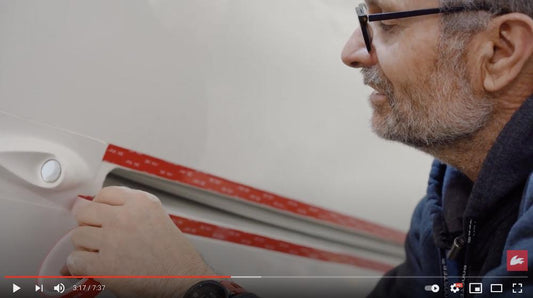
How to Change your Mylar Slot Gasket with 3M Tape
We did it... I was inspired to track down the tape that was used to win the 470 gold at the Olympics. We ended up working closely with 3M to find this solution. Its been on my boat now for 12 months and is super easy to fit and durable. Check out the latest Blog post below. Now available from Rooster in 10mm width rolls and 19mm width rolls for Mylar Slot Gaskets.
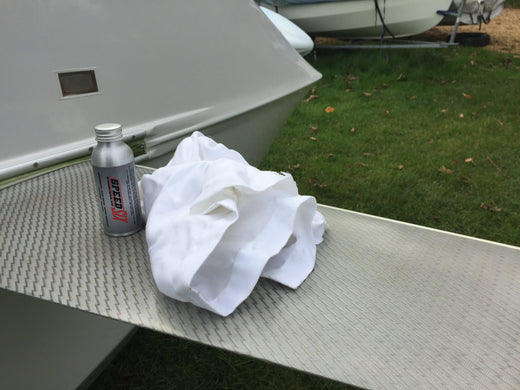
Need a Premier Hull Finish? - Use SpeedSIX HydraPRO
Field application of SpeedSIX HydraPRO
SpeedSIX HydraPRO comes if two handy sizes either a 100ml tin (enough for most dinghies) or a 500ml version (suggested for keelboats). The product comes in a quality aluminium screw-top container (the 100ml on test here) which is suitable to cover most dinghy hulls. The boat in question to have the product applied was an FRP Solo (LOA 3.78m). First job before applying the product, is to ensure that the hull is completely clean, degreased and any residue, dirt or grime is removed.
Fig 1 Photo of hull before cleaning. To assist with the clean up, I used a bike product called ‘Muc-off’ (a pink cleaner that is biodegradable, free from acids, CFC’s and solvents etc), and this was sprayed on and then washed off with clean water and a sponge. The hull was then completely dried using a microfiber towel.
Fig 2 Initial cleaning and drying of the hull. It must be remembered that SpeedSIX HydraPRO will not remove scratches or imperfections in the hulls surface. SpeedSIX HydraPRO is not abrasive, it is simply a top/final coating applied to reduce friction between the hull and the water surface. For best results, it is therefore recommended that the hull is in good condition and any work to remove scratches, marks, dents etc is done beforehand.
It is suggested that a product such as G3 is used to remove any small scratches or imperfections beforehand, and then cleaned and polished accordingly
Fig 3 Use a clean, dry cotton cloth with SpeedSIX HydraPRO. The day of application was quite an overcast day with an air temperature approx. 12°C and dry. It is suggested that you wear a quality pair of Latex gloves when using any cleaning or polishing product. Shake the container well. The SpeedSIX HydraPRO product is very thin and has an interesting smell! Use a dry clean cotton cloth (lint free) to apply the product in a circular motion. Apply to a small area at a time. A small amount of the liquid goes a long way - you don’t need to use a lot of it, in fact, the 100ml tin would easily cover a Solo, RS Aero, Laser or similar size dinghy, and you would have some left over for the foils etc. Allow the applied coating to dry. As it was a particularly cold day I left the product to dry for about 15-20 mins and then, used another new cotton cloth to polish the dry residue. The result was a good clear, glossy, shiny hull.
Fig 4 The final polished hull & centreboard The boat remained on each side for at least 2 hours before putting back onto its trolley. It was noticeably ‘slippery’ on the cradle when putting it onto the trolley and when slightly moving it around. As a further long-term test, I applied SpeedSIX HydraPRO to a small area on the transom of a small keelboat, in particular, on the waterline area. Keelboats that are kept on some estuary moorings tend to get a brown ‘stain line’ just above the waterline and can be quite difficult to remove at the end of the season. I applied a small amount of SpeedSIX HydraPRO to the waterline area, and it will be interesting to see if this reduces any future staining.
Fig 5 SpeedSIX HydraPRO was applied to the waterline area of a keelboat In conclusion, the product is good value, and a little of the liquid goes a long way. It gives a good glossy finish, very easy to apply and to remove any surface residue left. It is quite a thin liquid and should be applied sparingly to your hull. Remember, it does not remove scratches, imperfections or would not rejuvenate a faded gelcoat surface. Any such remedial work would have to be done before applying the SpeedSIX HydraPRO product.
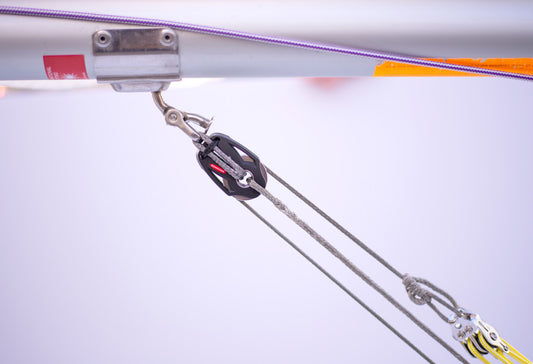
Ronstan Orbit Lashing Blocks and Attachment Methods
Ronstan’s latest range of small 20 and 30 mm diameter Orbit blocks are designed to be used on dinghies and keelboats and are versatile enough to be used in most applications where strength, weight and friction-free running are important. The design of the range is based on modern ropes to secure with the elimination of heavy rigid shackles.
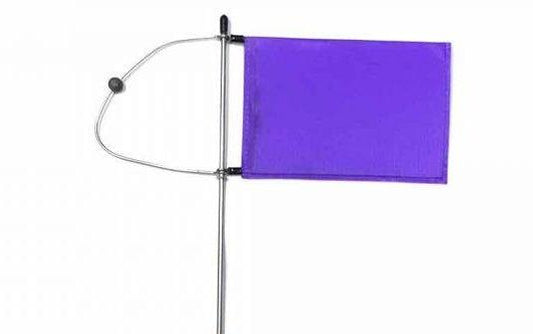
Competition Entry #1: Keep Your Burgee On
I sail at Combs Sailing Club in the Peak District. It's a reservoir surrounded by hills so gusty winds and capsizes are inevitable. I got fed up with righting the boat and finding the burgee staff with no burgee on it.....
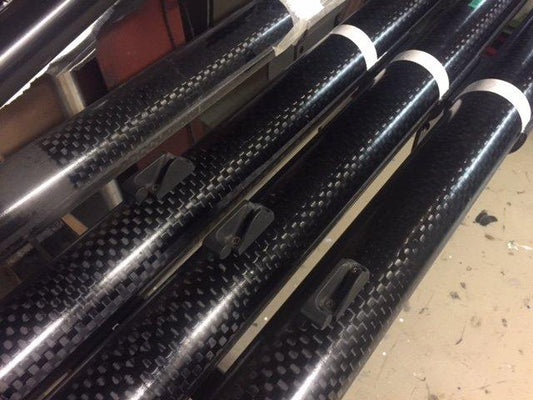
Varnishing a carbon mast
I'm now of an age where my memory isn't quite what it once was. At work, I have become highly skilled in feigning a detailed understanding of problems whilst frantically attempting to recall them from memory (it's working, they haven't found me out yet!). And when I came to revarnish my mast last weekend it was apparent that I could not recall the process that gave a glass finish last year. So I thought I'd write a quick article about it as an aide memoire for me next year, and also for anyone else looking at the task.
I should point out, I have tendency for perfectionism that is both a strength and an Achilles heel, and find anything less than a glass finish difficult to accept. So the attached instructions may be a little OTT, but perhaps a good start point.
A good quality marine polyurethane varnish (I use Blakes Duragloss)
Thinners for the varnish.
The best 2" paint brush that you are prepared to buy. If you are at the 'I can't believe that a brush can cost so much' type pricing, that's about right.
Some dust free containers to mix your varnish (jam jars etc)
Good quality masking tape, again the money seems excessive but it is ultimately worth it.
Lots of wet and dry sandpaper from 240 grit to 600 or 800 grit. And a bucket and sponge
You also need to hang your spar level, and be able to access the full length of the spar. A set up that allows you to easily turn the spar to varnish is useful:
If the existing varnish is not too bad, sand back using 240 grit wet and dry. Take care not to sand back into the fibres of the spar, but be sure to remove all the imperfections and dings that have blighted your spar over the past year. Keep working until you think the preparation is as close to perfect as possible- any defects left at this point just mean more work later. If you are worried about minor 240-grit scratches showing through your varnish, work up through wet and dry grades to 600/800, but again be careful not to sand into the spar.
Wash the spar several times with water, until you are confident that it is perfectly clean. Mask fittings etc with your good quality masking tape. Wipe the mast with a tack cloth. Wipe the mast with a cloth moistened with thinners immediately prior to varnishing to get rid of any final traces of dust and 'activate' any old varnish.
Wait for the following conditions: 15 degrees C (ish), spar not hot to the touch, preferably no direct sunlight, dry conditions for at least 6 hours (no rain or dew), no wind. Apply a coat of varnish. Irrespective of directions on the tin, I always thin the varnish by 5-15% so that it flows nicely, and go for thin coats.
Read the overcoating instructions on the tin, and apply a further coat before the 'max overcoating' time.
Stand back from the mast, and start worrying about where all those varnishing defects have come from. Flat back the varnish - if your preparation was near perfect first time round you might be able to flat back with 600 grit, if not you may need coarser grits.
You are looking to get to a point where the whole mast is coated with flatted-back varnish, no runs or other defects. If you are not at this point go to (2) and try again. May take several iterations.
Time to apply the final top coat. Get obsessive about the conditions outlined in (3). Get everything as clean as possible, accept no defects. Be sure to thin your varnish.
Just after the final coat is applied, turn the spar through 90 degrees every minute or so, whilst the solvents flash off. This helps to stop runs forming and makes it easier for the varnish to flow. .
Decide whether the finish is good enough, and repeat steps above as necessary.
The whole process takes me 4 hours or so, but that's on a spar that is regularly maintained. As soon as this gets down to our club it will be surrounded by 400 and Laser sailors all looking to find little defects, but I shall rise above it!


